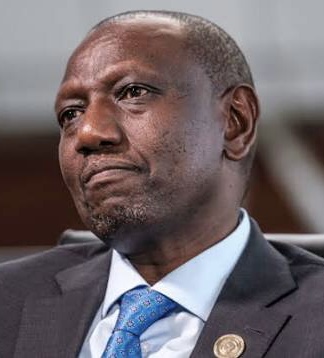
President William Ruto……Photo/IP
By Peter Mwibanda, Political and Legal Analyst, writing for IntellectualsPost
Kenya stands at a defining moment in its democratic journey.
The country is caught between the persistence of ethnic politics and the constitutional promise of a unified republic grounded in citizenship, rights, and equal opportunity.
More than a decade after the 2010 Constitution reimagined the state as inclusive, devolved and rights-based, the gap between legal ideals and political reality remains deeply visible.
Elections continue to be shaped by ethnic mobilization rather than issue-based competition.
Political coalitions are often assembled through regional bargaining instead of ideological alignment.
This dynamic fuels ethnic antagonism, deepens mistrust, and turns every electoral cycle into a contest of identity rather than governance.
The consequence is a fragile national cohesion that is repeatedly tested by political transitions.
Cabinet appointments and senior public service positions have also become symbolic battlegrounds of representation.
While inclusivity is a constitutional requirement and a political necessity in a diverse society, it is frequently interpreted through ethnic arithmetic rather than merit, competence and national vision.
This perception—whether accurate or not—feeds public skepticism about fairness in governance and weakens trust in state institutions.
Corruption further complicates the national question.
When public resources are captured through patronage networks, inequality intensifies and the idea of equal citizenship is eroded.
Corruption does not merely steal money; it fractures the social contract by reinforcing the belief that access to power determines access to opportunity.
Devolution, designed as a corrective mechanism to historical marginalization, has delivered development gains in many regions.
Yet it also risks reproducing localised exclusion if accountability, transparency, and fiscal discipline are not strengthened.
County governments must not become smaller versions of centralized patronage systems, but engines of equitable development.
Security and safety remain equally central to national cohesion.
A republic cannot function where citizens feel vulnerable due to political violence, policing excesses or weak rule of law.
Security institutions must remain professional, impartial and fully insulated from political competition to preserve public trust.
The challenge before Kenya is therefore not the existence of diversity, but its political management.
The nation must transition from identity-driven politics to a civic order anchored in shared national ethos,constitutionalism and responsibility.
Political parties must evolve into ideological institutions, competing on policy rather than ethnicity.
Leadership must prioritize inclusion balanced with meritocracy, ensuring competence is not sacrificed for political convenience.
Ultimately, Kenya’s unity will not be secured through rhetoric but through consistent institutional reform and civic consciousness.
The goal is a republic where citizenship is equal in law and practice and where prosperity is shared across all communities.
The unfinished task is clear: to transform Kenya from a nation negotiating ethnic balance into a republic defined by rights, responsibilities and a common national destiny.