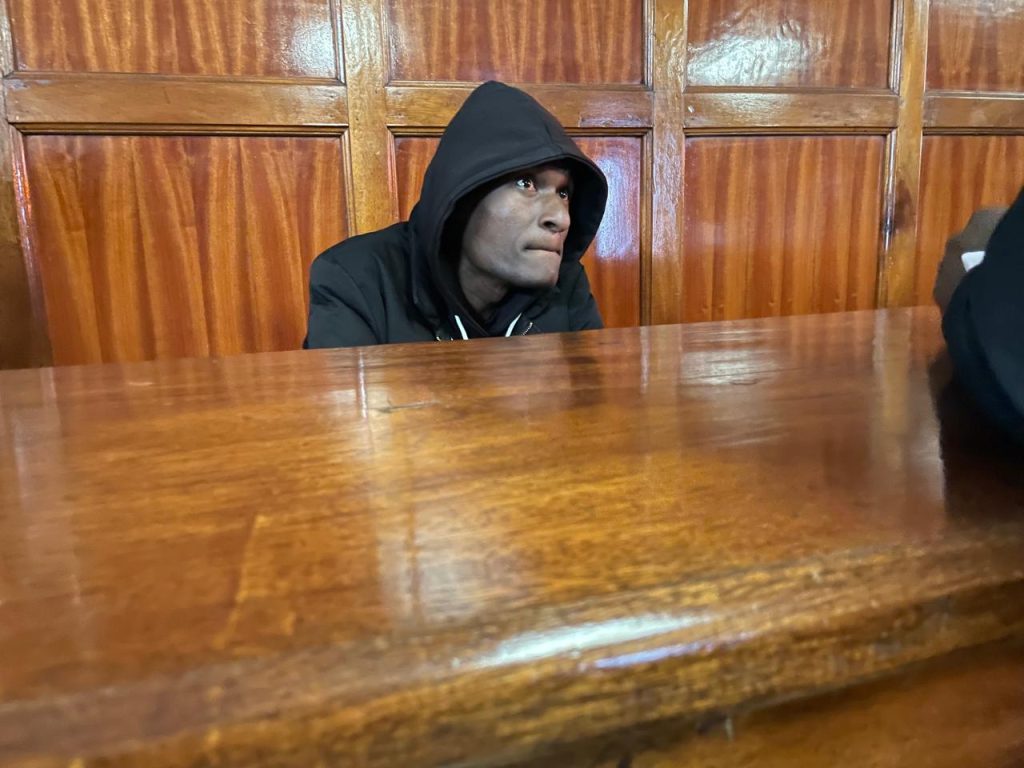
Police Constable Klinzy Masinde Barasa to be charged with murder after shooting a protester on June 25.
By Peter Mwibanda.
NAIROBI, Kenya (AP) — President William Ruto’s alleged shoot-to-kill order is facing a stark reckoning.
As public anger deepens over police brutality during the Gen Z-led protests, the very officers who acted on the state’s iron-fist rhetoric are now standing trial—alone and unprotected.
Cabinet Secretary for Roads Kipchumba Murkomen, a close ally of Ruto, had vowed to defend any officer charged over protest killings. “Even if the charge is murder, I will stand with them,” he declared to a cheering crowd.
But when the moment came, the state’s promises vanished.
Last week, Constable Klintz Masinde appeared in a Nairobi court, accused of killing an unarmed hawker during a protest crackdown.
The courtroom was tense. The ministers were absent. There was no state-sponsored legal team. Just a young officer, visibly shaken, facing a murder charge alone.
Legal experts say the case is a turning point—forcing Kenya to confront the legal boundaries of state orders and individual accountability.
“Unconstitutional orders are no defense,” said constitutional lawyer Martha Mweni. “The Constitution is clear—no one, not even the President, is above the Bill of Rights.”
Article 26 of the Kenyan Constitution guarantees the right to life. Article 29 prohibits cruel and degrading treatment.
Use of force must be lawful, necessary, and proportionate. Legal scholars warn that shoot-to-kill directives are neither.
What began as a crackdown on anti-tax protests has spiraled into a human rights crisis.
Dozens are dead—many shot at close range. Viral videos show protesters fleeing before being gunned down.
Yet, high-ranking officials have fallen silent.
No Cabinet Secretary has appeared in court to support the accused officers neither a State House official has visited the families of those killed.
As murder charges rise, the political class is retreating behind podiums and press releases.
“It’s betrayal in uniform,” said a police source. “We were told to restore order at all costs. Now we’re alone.”
The Independent Policing Oversight Authority (IPOA) is investigating multiple cases of alleged excessive force.
Several officers have been summoned and many more prosecutions are expected.
Human rights groups now demand a probe into whether executive orders breached national or international law.
“Command responsibility must be addressed,” said Haki Africa’s Hussein Khalid. “If political instructions led to killings, the entire chain must face justice.”
For many officers, the message is clear: those who pull the trigger will stand alone—even if they acted in the name of the state.
For Klinz Masinde, that moment has come. Once a street patrol officer, he now sits behind bars, his badge replaced by a case file and a murder charge that may define his future.
In Kenya today, political protection is fleeting. Justice, however delayed, is catching up.
Ends.