By Peter Mwibanda.
MAASAI MARA, Kenya (AP).
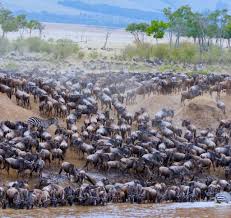
A thunderous wave of hooves, dust and instinct is once again sweeping across the Mara-Serengeti plains as the world-famous wildebeest migration begins, signaling Kenya’s annual moment on the global tourism stage.
More than 2.5 million wildebeests, zebras and gazelles are expected to cross the crocodile-infested Mara River in the coming weeks in what’s often dubbed the Eighth Wonder of the World — a wild, dramatic spectacle of survival and instinct.
Tourism officials estimate that more than 350,000 domestic and international visitors will visit the Maasai Mara during the migration season, bringing a significant boost to a sector still recovering from years of travel disruptions and political unease.
“This is our Super Bowl,” said a senior official at the Kenya Tourism Board. “The migration is not just a wildlife event—it’s an economic heartbeat.”
A Natural Wonder Under Pressure.
While the Mara’s grandeur remains intact, questions are emerging over whether Kenya is slowly pricing itself out of the safari race.
Park fees, rising lodge rates and multiple levies are beginning to drive tourists—and their dollars—across the border into Tanzania’s Serengeti.
There, park costs are more stable, logistics are often simpler, and migration views are equally breathtaking.
“Tourists are shopping for value,” said Naomi Wambua, a tour consultant based in Nairobi. “Tanzania is upping its game, and with similar access to the migration, it’s becoming a serious competitor.”
Conservation vs. Commercial Pressure.
Kenya has long been the gold standard of African safari experiences—where crimson-robed Maasai guide travelers under golden skies, and lions roar across endless savannahs.
But maintaining that reputation requires balance. Tour operators and conservationists alike are urging the government to review park entry fees, incentivize domestic travel, and invest in community partnerships that ensure sustainability and affordability.
“There’s no tourism without conservation,” one lodge manager noted. “But there’s also no conservation if people stop coming.”
Still Unmatched.
Despite growing concerns, few dispute that the Maasai Mara still offers something truly magical.
Nowhere else does the raw rhythm of life and death play out on such a cinematic scale—from adrenaline-fueled river crossings to big cat hunts set against amber sunsets.
For those lucky enough to witness it, the migration offers more than just photos—it offers awe.
Reclaiming the Safari Crown.
As the migration thunders on and Kenya welcomes the world, tough questions remain: Will policy and pricing changes come in time to protect the country’s safari dominance? Or will complacency cede ground to Tanzania’s rising profile?
For now, the herds are moving. The world is watching. And Kenya’s place as Africa’s safari capital hangs in the balance.
#TembeaKenya
#WildebeestMigration2025
#MaasaiMaraMagic
#SaveOurSafari