


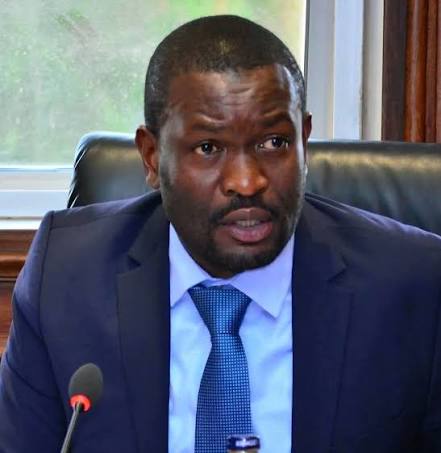
Linda mwananchi leader Edwin Sifuna…..Photo/IP
By Peter Mwibanda
Legal and Political Analyst | Intellectuals Post
NAIROBI, Kenya (IP)
As Kenya’s political class turns its attention to the 2027 General Election, a new electoral battleground is emerging that could determine the country’s next president.
Western Kenya, home to the Luhya community—one of the nation’s largest voting blocs—is rapidly becoming the focal point of intense political competition between President William Ruto’s administration and an increasingly energized opposition.
For decades, the region has been politically fragmented, with voters supporting different parties and leaders.
That fragmentation has made Western Kenya one of the most contested regions in every presidential election. Today, however, the stakes are even higher.
Following signs of shifting political dynamics in other parts of the country, including Mount Kenya, the region has become indispensable to any candidate seeking to build a winning national coalition.
Ruto’s Strategic Investment
Since assuming office, President William Ruto has made repeated visits to Western Kenya, launched development projects, appointed influential leaders from the region to senior government positions and promised increased investment in roads, agriculture, electricity and trade.
These efforts reflect a broader political calculation: expanding support in Western Kenya could offset potential losses elsewhere and strengthen the ruling coalition’s path to re-election.
However, political goodwill cannot be sustained by development pledges alone. Voters will ultimately judge whether government policies have improved their daily lives through better employment opportunities, lower living costs and stronger public services.
The Rise of Alternative Political Voices
At the same time, the region has witnessed the emergence of influential political figures who are presenting alternative visions for Western Kenya’s future.
Among them is George Natembeya, whose Tawe movement has generated significant public discussion in parts of the region. Built around themes of regional empowerment, accountability and development, the movement reflects growing calls for stronger local leadership.
Although it remains too early to determine its long-term electoral impact, the movement has added a new dimension to Western Kenya’s political landscape.
Edwin Sifuna’s Growing National Profile
Another prominent figure is Nairobi Senator Edwin Sifuna.
Known for his outspoken criticism of government policy and his visibility in national political debates, Sifuna has expanded his influence beyond Nairobi.
His legal background, communication skills and appeal among younger voters have made him one of the opposition’s most recognizable figures.
Whether his growing popularity translates into broader electoral influence across Western Kenya remains uncertain, but his prominence illustrates how the region is increasingly contributing leaders to the national political conversation.
A Region That Could Decide the Presidency
The Luhya vote has rarely moved as a single bloc. Instead, different counties and communities have often backed different parties and presidential candidates.
That diversity means every vote matters. Even modest shifts in support could have significant implications in a closely contested national election.
For both the ruling coalition and the opposition, success in Western Kenya will depend on building trust, addressing local priorities and presenting credible national agendas rather than relying solely on political rhetoric.
Beyond Identity Politics
While ethnicity has historically influenced Kenyan elections, there are indications that many voters are placing greater emphasis on economic performance and governance.
Across Western Kenya, concerns about youth unemployment, agricultural productivity, infrastructure, healthcare, education and the cost of living feature prominently in public discourse.
Political leaders who respond convincingly to these issues may find greater resonance than those relying exclusively on regional or ethnic appeals.
The Road to 2027
President Ruto’s engagement with Western Kenya demonstrates his recognition of the region’s electoral importance.
Equally, the emergence of new political movements and opposition voices shows that competition for the region’s support is intensifying.
It is too early to conclude how Western Kenya will vote in 2027. Political alliances remain fluid, new coalitions may emerge and voter preferences can evolve as the campaign unfolds.
What is already clear is that Western Kenya is no longer a peripheral battleground. It has become one of the decisive arenas where Kenya’s next presidential election may be won or lost.
The coalition that earns the confidence of the people of Western Kenya—not simply through promises, but through performance, policy and persuasive leadership—could gain a critical advantage in the race to State House.
Ends.



