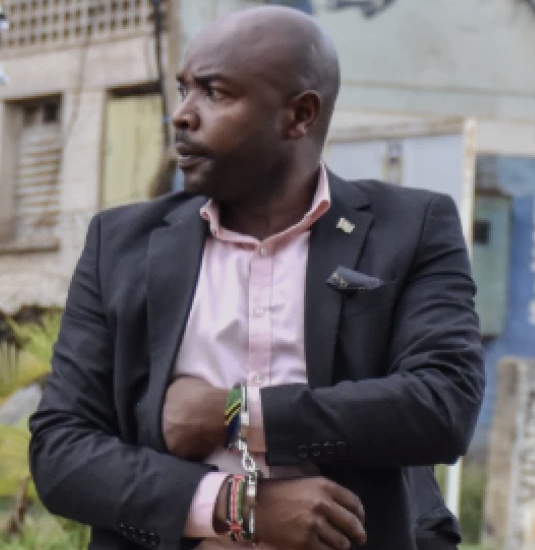
Busia Land Registrar Collins Liyayi
By IP reporter
BUSIA/NAIROBI, Sept. 24, 2025
The Ethics and Anti-Corruption Commission arrested a Busia land registrar accusing him of demanding and pocketing a KSh10,000 bribe to release a processed title deed .
This is the latest raid by EACC sleuths in a string of high-profile actions by the anti-graft agency that has included the recent detention or questioning of prominent county governors.
The commission said Collins Aiela Liyayi was nabbed after weeks of complaints from residents who alleged he withheld completed title documents and demanded payment as “release fees.”
The Busia case comes after recent detentions and investigations involving senior county officials.
In the past months the EACC arrested Trans-Nzoia Governor George Natembeya in connection with alleged embezzlement of county funds and former Bungoma Governor Wycliffe Wangamati has been arrested and charged in separate corruption cases.
Kiambu Governor Kimani Wamatangi has been summoned and questioned by investigators and has obtained court protection against arrest in some proceedings.
“We will not tolerate public officers or state agents who extort ordinary citizens,” the commission said in a short statement announcing the Busia arrest.
Local residents who lodged the complaint welcomed the arrest.
“We paid for our titles, the deeds were ready and the registrar demanded money. We reported and we are glad action was taken,” one Busia resident said.
Some analysts and politicians called the campaign selective.
They say while arrests of mid-level officials for petty graft are necessary, concentrating publicity on a few high-profile detentions without broader institutional reform risks appearing as image management.
Critics note several patterns they say undermine confidence: delays in prosecution of some high-profile cases, legal interventions blocking arrests and allegations that some probes coincide with political disputes.
“Selective targeting and stop-gap arrests may create headlines, but they do not dismantle the networks that facilitate corruption,” a governance analyst said.
Supporters of the EACC counter that investigations and arrests — whether of a registrar demanding a small bribe or a governor accused of large-scale embezzlement — demonstrate that the commission is pursuing corruption at all levels.
The Busia arrest — for KSh10,000 — underscores that petty corruption remains a daily barrier to services such as land registration, which Kenyans routinely cite as an area vulnerable to rent-seeking.
Anti-graft campaigners say tackling both small-scale bribery and systemic embezzlement is essential: prosecutions must be paired with reforms that reduce discretion, speed up service delivery and increase transparency in land offices.
The EACC has in recent months moved against a number of current and former governors and county officials, prompting debate about whether the effort reflects a sustained anti-corruption drive or episodic enforcement with political overtones.
The Office of the Director of Public Prosecutions has approved charges in several county cases, and some governors have already pleaded not guilty; others have challenged the agency in court.
What happens next in the Busia matter will be watched as a test of process as well as intent: will the registrar be rapidly charged and prosecuted, and will complainants receive timely redress? Or will the case, like many that win headlines, stall in lengthy court battles?
Governance experts say speedy, transparent handling and public reporting of case outcomes are key to proving the crackdown is more than PR.