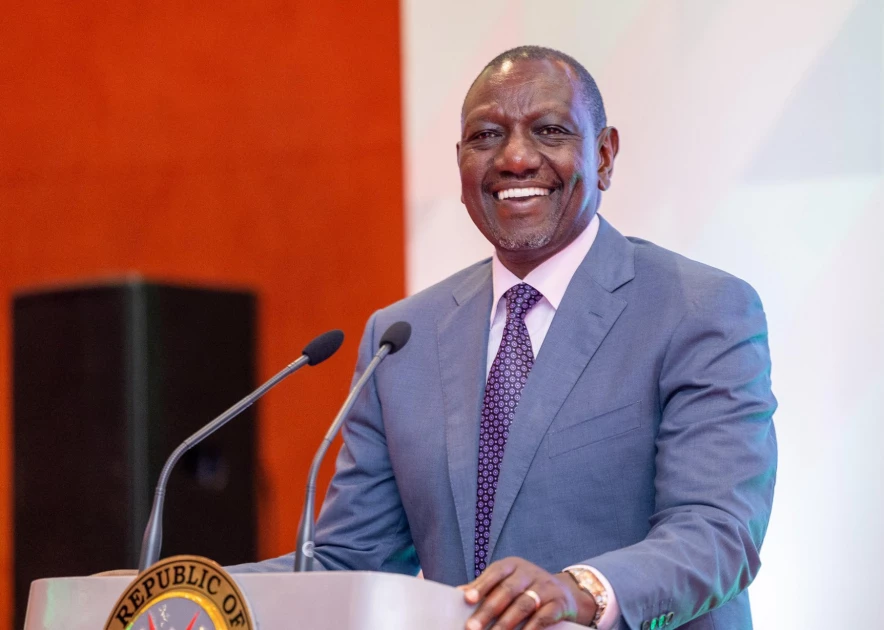
President Ruto
By Peter Mwibanda intellectuals Press
Nairobi, Kenya (IP)
When Kenyan President William Ruto lashed out at Members of Parliament over corruption, many saw it as a bold stroke against graft.
But for growing numbers of Kenyans and political analysts, the president’s tirade is being branded as a masterclass in hypocrisy — a case of the proverbial pot calling the kettle black.
Despite a campaign built on promises to make corruption a high-risk venture, the reality under Ruto’s administration tells a different story.
A mounting series of scandals from irregular oil import deals to questionable medical supply tenders has raised deep concerns about integrity at the highest levels of the executive.
Recent data from the Ethics and Anti-Corruption Commission (EACC) paints a damning picture: corruption within the executive dwarfs that in Parliament.
For citizens struggling under rising living costs and dwindling public services, the numbers tell a story of betrayal.
Fertilizer Fiasco and KEMSA Scandal
The fertilizer subsidy scandal is perhaps the most biting for rural Kenyans.
Intended to lift the burden on struggling farmers, the program has instead been tainted by revelations of counterfeit and overpriced supplies.
Many farmers particularly in the Rift Valley — the president’s political backyard — say they have been left worse off, betrayed by a system that promised relief but delivered ruin.
At the Kenya Medical Supplies Authority (KEMSA), procurement irregularities continue to raise red flags.
Billions of shillings have reportedly been siphoned through dubious tenders, echoing patterns seen during the COVID-19 pandemic under the previous administration.
For a president who vowed to drain the swamp, critics argue, the rot appears only to have deepened.
Cloaked Generosity or Patronage Politics?
Adding fuel to public frustration are the conspicuous cash handouts by senior government officials including Ruto himself — during church services and public events.
Branded as acts of generosity, these public displays of wealth have been criticized as modern-day patronage politics, designed to maintain loyalty rather than solve structural issues.
“The optics are terrible,” says political analyst Martha Musyoka. “It’s difficult to preach fiscal discipline while showering millions on congregations. People see it for what it is — populism cloaked in piety.”
Raila Odinga’s Silent Endorsement?
Ironically, Ruto’s newfound ally and long-time opposition figure Raila Odinga has maintained a deafening silence on these matters.
Once a vocal critic of government excesses, Odinga’s proximity to power through the bipartisan dialogue process has drawn criticism from civil society groups who accuse him of enabling rather than checking executive overreach.
For many, Odinga’s muted stance has helped embolden an administration already facing declining public trust.
A Hollow Crusade?
Though the president continues to tout his administration’s commitment to fighting graft the implementation appears selective and politically calculated.
While Parliament is being publicly flogged, the executive continues to operate with little transparency and weak accountability.
“The anti-corruption fight under Ruto reeks of insincerity,” says human rights lawyer James Otieno. “It’s theater. You can’t call out a speck in Parliament while ignoring the log in your own State House.”
Indeed, the EACC’s most recent quarterly report confirms what many Kenyans already suspect that the majority of ongoing graft investigations involve executive agencies, not Parliament.
International Implications
For international partners and investors, Kenya’s struggle with corruption raises questions about governance, aid utilization, and financial transparency.
The World Bank and IMF both of which have extended credit support to Kenya have called for stricter anti-corruption frameworks demands the government has repeatedly pledged to meet with limited results.
As Kenya positions itself as a regional economic and diplomatic powerhouse, persistent executive corruption risks eroding its credibility abroad and weakening its influence within the East African bloc.
Bottom Line: President Ruto’s war on corruption appears more rhetorical than real.
As scandals pile up and executive impunity persists, public faith is waning and with it the promise of a transparent, accountable government.
Unless the rot at the top is addressed with the same vigor directed at Parliament, Kenya’s anti-graft crusade may collapse under the weight of its own
Ends.