By IP Team.
NAIROBI, Kenya — A new HIV prevention injection hailed as a “game-changer” is set to be rolled out in Kenya next year, sparking hope among high-risk populations and healthcare professionals alike.
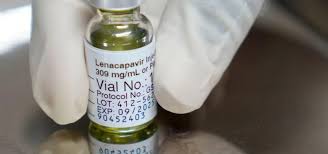
The drug, Lenacapavir — a long-acting injectable administered just twice a year — is being welcomed by key populations including discordant couples, sex workers, and young women as a breakthrough in the country’s fight against new HIV infections.
“This is a landmark moment in HIV prevention,” said Dr. Ruth Achieng, a public health officer in Nairobi.
“For patients tired of the daily pill burden or facing stigma in accessing medication, Lenacapavir offers both discretion and consistency.”
Unlike current Pre-Exposure Prophylaxis (PrEP) regimens that require daily oral medication, Lenacapavir only needs to be injected once every six months.
The jab works by blocking a key protein that HIV needs to replicate, offering protection to HIV-negative individuals at high risk of infection.
In Kenya, where an estimated 1.4 million people live with HIV and more than 32,000 new infections are recorded annually, the injectable’s introduction has been met with cautious optimism.
“I have been on oral PrEP for three years, and sometimes I forget or fear being seen taking pills,” said Mercy*, a sex worker in Kisumu. “This injection will change my life. Twice a year, and I can go on with my work and protect myself.”
Discordant couples — where one partner is HIV positive and the other negative — have also expressed relief, saying Lenacapavir could ease relationship strains tied to adherence challenges and fear of infection.
However, despite the excitement, health experts are warning that the rollout may face major hurdles.
Chief among them is cost. Lenacapavir is currently priced at several thousand U.S. dollars per dose in Western markets — a figure that is unsustainable for Kenya’s public health sector unless subsidized by global partners or pharmaceutical companies.
“We need urgent pricing negotiations and licensing deals,” said Dr. David Mutua, a policy advisor at the National AIDS and STI Control Programme (NASCOP). “Without that, this innovation could remain out of reach for those who need it most.”
Access and awareness are also critical. Rural populations, adolescent girls and young women — who account for a disproportionate number of new infections — may be left behind if targeted outreach is not scaled up.
“Rolling out the jab is one thing. Ensuring people know about it, trust it, and can get it without stigma is another,” warned Mary Aoko, an HIV rights advocate.
Kenya will be among the first African countries to adopt Lenacapavir as part of its national HIV prevention strategy, following clinical trials that showed high efficacy and minimal side effects.
The Ministry of Health is currently working with international donors, including the Global Fund and PEPFAR, to finalize implementation plans, train healthcare workers, and develop guidelines for prioritizing access among vulnerable groups.
If successful, the twice-yearly jab could significantly reduce HIV transmission rates, especially among populations where daily pill regimens have failed or been unsustainable.
As 2026 approaches, the big question remains: will this promising innovation reach the people who need it most, or will cost and bureaucracy dim the light of hope?
—
Peter Mwibanda is a legal analyst and blogger focused on health, governance, and social justice in Kenya.