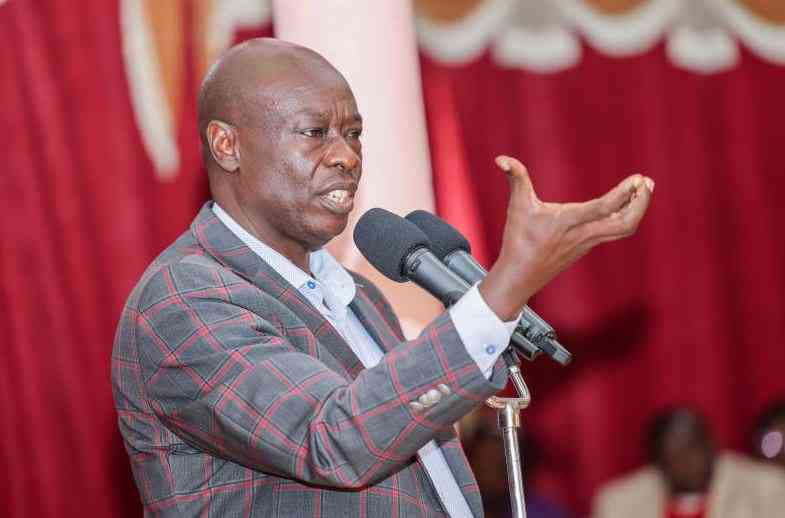
By Mwibanda.
In recent political discourse, Deputy President Rigathi Gachagua’s stance has drawn significant scrutiny, particularly regarding his alleged favoritism towards his Mount Kenya region. This issue has become a critical turning point for him, raising questions about his ability to navigate Kenya’s complex political landscape.
Dismissed Defenses and Rising Concerns
Gachagua has defended his actions by citing the positions of his Kenya Kwanza coalition partners. However, many have dismissed these justifications as insufficient, highlighting a growing discontent among Kenyans regarding corruption and nepotism. A recent report underscores widespread dissatisfaction with these practices, suggesting that the perception of ethnic favoritism is becoming increasingly toxic.
The Deputy President’s reliance on support from his Mount Kenya region is notable. Reports indicate that many of his staff hail from this area, reinforcing a narrative of exclusion that undermines the principles of equality and inclusivity embedded in Kenya’s Constitution. Such an alignment raises concerns about a culture of favoritism that could alienate other communities.
The Ethnic Affiliation Debate
Ethnic affiliation in Kenyan politics has long been a double-edged sword. While it can mobilize support, it also risks deepening divisions and fostering resentment among those left out. Gachagua’s vocal commitment to prioritizing Mount Kenya has not only fueled allegations of nepotism but has also ignited debates on whether leadership should be more inclusive. Critics argue that this approach contradicts the spirit of national unity, as it effectively sidelines other regions.
The political implications of Gachagua’s approach are profound. As he positions himself as a champion of Mount Kenya, he simultaneously invites scrutiny from those who feel marginalized. This creates a precarious balance; while he may consolidate power within his ethnic base, he risks isolating himself from broader national support.
Analyzing Gachagua’s Political Trajectory
As Gachagua navigates these turbulent waters, his political future remains uncertain. The dissatisfaction among Kenyans regarding corruption and nepotism cannot be ignored. His attempts to bolster Mount Kenya’s status must be weighed against the need for a more inclusive governance model.
Political analysts suggest that Gachagua’s ability to adapt will determine his trajectory. Will he heed the calls for reform and inclusivity, or will he double down on his ethnic base? The answer to this question will not only affect his political survival but could also shape the future of Kenya’s political landscape.
Conclusion: Navigating the Tides
As the Deputy President faces mounting challenges, the question remains: can he navigate the tides of discontent and ethnic division? The path forward will require careful consideration of the diverse Kenyan populace and a shift towards a more inclusive approach. Failure to do so may well mark Gachagua’s political Waterloo, cementing a legacy defined by exclusion rather than unity.
In this climate, the hope for a more equitable Kenya hinges on leaders who prioritize the collective good over ethnic allegiances. How Gachagua chooses to respond will be pivotal, not only for his political career but for the nation as a whole.