By Mwibanda
– Power Struggles and Future Prospects
Introduction
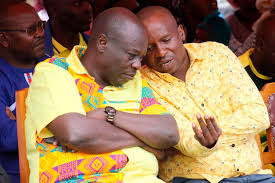
Kenya’s political landscape is undergoing a dramatic shift as Deputy President Rigathi Gachagua and Interior Cabinet Secretary Kithure Kindiki engage in a fierce power struggle for dominance in Mt. Kenya. This internal clash within President William Ruto’s administration underscores significant power dynamics and raises critical questions about Gachagua’s future. As this rivalry intensifies, its implications for Kenya’s political arena and the 2027 elections become increasingly complex.
Power Play in Mt. Kenya: Gachagua vs. Kindiki
The rivalry between Rigathi Gachagua and Kithure Kindiki exemplifies the broader political maneuvering in Kenya. Gachagua, a close ally of President Ruto, has leveraged his position to build a solid support base in Mt. Kenya. His focus on economic development and regional issues has resonated with many voters but also attracted criticism and opposition from within the government.
In contrast, Kindiki has capitalized on his role as Interior Cabinet Secretary to enhance his profile. His handling of security and administrative matters has elevated his stature, making him a significant contender in the Mt. Kenya power struggle. His strategic moves and growing prominence have sparked speculation about his future ambitions and potential roles in Kenyan politics.
Gachagua’s Paradox: Resignation or Resilience?
Gachagua’s situation is fraught with complexity. His role as deputy president provides substantial power and visibility, but it also places him in a precarious position within the ruling party. The dynamics within the government, combined with his alignment with regional interests, create both opportunities and challenges.
Gachagua faces a crucial decision: whether to resign and pursue an independent political path or to fight for his position within the current administration. Resigning could allow him to redefine his political identity and position himself for the 2027 presidential race, leveraging his regional support and capitalizing on any dissatisfaction within the current administration.
Conversely, Gachagua might opt to remain within the ruling party, using his current role to navigate internal politics and forge necessary alliances. This approach would involve balancing his regional interests with broader political realities, potentially requiring strategic compromises and negotiations with figures like Kindiki.
Future Prospects
Several factors will shape Gachagua’s future:
Political Alliances: Gachagua’s ability to forge and sustain strategic alliances will be critical. His political survival will depend on his capacity to build a robust network of supporters, whether he remains in the current administration or starts a new political movement.
Public Perception: Public opinion and media scrutiny will significantly influence Gachagua’s prospects. His performance on key issues such as economic development and security will impact how he is viewed by both the electorate and political analysts.
Internal Party Dynamics: The internal dynamics of Ruto’s party will play a pivotal role. Gachagua’s ability to navigate these complexities, especially in relation to Kindiki and other influential figures, will be crucial in determining his future trajectory.
2027 Presidential Race: Gachagua’s long-term strategy will likely focus on positioning himself for the 2027 presidential election. His path—whether within the ruling party or through leading a new political movement—will significantly impact his political future and the broader electoral landscape.
Conclusion
The power struggle between Rigathi Gachagua and Kithure Kindiki highlights deep-seated currents of ambition and influence within Kenya’s ruling elite. As this internal battle unfolds, the implications for Gachagua’s future remain uncertain. Whether he chooses to resign and forge an independent path or to navigate the complexities of the current administration will be pivotal in shaping his role in the 2027 presidential race and beyond. The evolving dynamics in Mt. Kenya and the broader political arena will continue to shape the discourse, marking this period as a crucial chapter in Kenya’s political history.