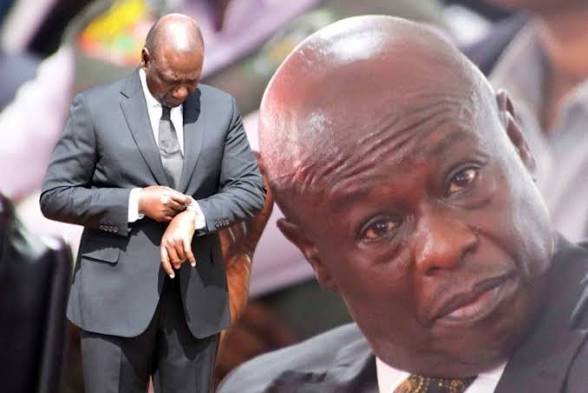
President William Ruto and former Deputy President Rigathi Gachagua…Photo/File
By Peter Marango Mwibanda | Intellectuals Post
NAIROBI
Kenya’s political temperature is rising—fast.
What began as routine contestation between the executive and opposition has devolved into sharp exchanges, public theatrics, and growing polarization that threaten the country’s fragile equilibrium.
At the center is President William Ruto, whose increasingly combative responses to critics mark a departure from the restraint traditionally associated with the presidency.
By engaging directly and often sharply, the Head of State risks eroding the office’s institutional dignity while deepening divisions.
With 15 months to the next general election, the stakes are high.
A Presidency in the Arena
Kenya’s Constitution envisions a presidency that is firm yet measured. The current trajectory, however, shows a presidency drawn into partisan contestation.
This shift blurs the line between governance and political survival, fostering a model driven less by policy and more by brinkmanship—an опасный path in a country with a history of electoral volatility.
The Opposition’s Role
The opposition, led by figures such as Raila Odinga, is mandated to scrutinize and hold the executive accountable.
Yet dissent is increasingly framed as obstruction, raising a key question: can democracy function when oversight is resisted?
If suppression prevails, Kenya risks drifting toward illiberalism—where elections exist but accountability weakens.
Politics of Pressure
Economic strain, unmet promises, and rising public discontent have heightened tensions.
The administration’s aggressive posture appears reactive, echoing a familiar pattern where governments lean on rhetoric when policy delivery falters.
Who Will Blink First?
Will the opposition ease pressure, or intensify it? Will Ruto adopt a more statesmanlike tone, or continue political combat?
If neither side relents, Kenya risks prolonged instability—marked by protests, legislative gridlock, and rising tensions.
A Call for Sobriety
Beyond personalities, institutions are at risk. Parliament, the judiciary, and public trust could suffer lasting damage.
As 2027 approaches, Kenya needs leadership that values restraint, respects dissent, and prioritizes stability over confrontation.
Conclusion
Kenya stands at a critical juncture. The current path is unsustainable.
The question is no longer who blinks first—but whether the political class will rise above the fray or pull the nation into deeper uncertainty.