By Peter Mwibanda……Photo/courtesy
A Call for Justice Beyond Words
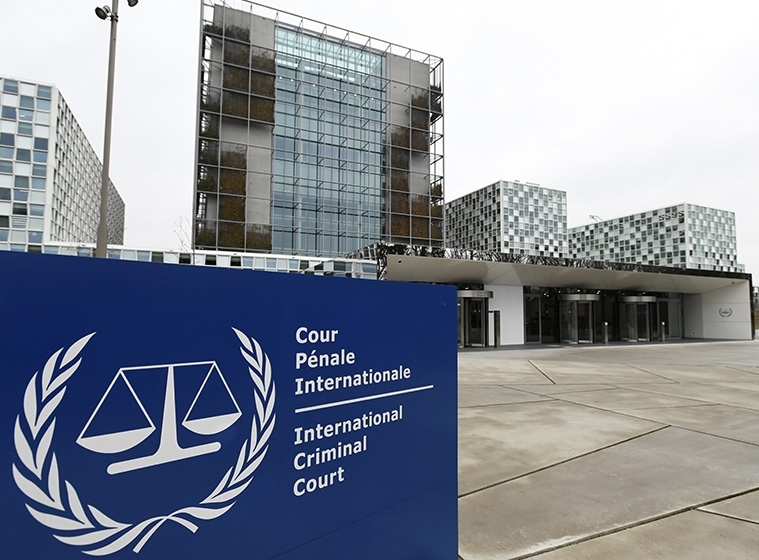
The International Criminal Court (ICC) cannot afford to remain silent as tyranny and impunity tighten their grip on parts of Africa once again.
If the court truly stands for international justice, it must train its sights on Tanzania and Sudan—two nations where the rule of law, human rights and democratic order are under mounting threat.
Sudan’s Unending Tragedy
In Sudan, the world has watched in horror as a brutal civil conflict spirals into one of the worst humanitarian crises of our time.
Reports of mass killings, ethnic cleansing, and targeted attacks on civilians have become the grim reality of daily life.
The Rapid Support Forces (RSF) and Sudanese Armed Forces continue to wage a merciless war, leaving millions displaced and thousands dead.
These atrocities bear the unmistakable marks of crimes against humanity and possible genocide—exactly the kind of cases the ICC was created to confront.
“Justice delayed is not only justice denied—it emboldens perpetrators and erodes global faith in international law.”
Yet, the court’s response has been sluggish, almost indifferent.
The same institution that boldly pursued warlords in the Democratic Republic of Congo and politicians in Kenya must not now turn away from the bloodshed in Sudan.
The ICC cannot afford selective blindness; it must act before history repeats itself in yet another forgotten African tragedy.
Tanzania’s Democratic Backslide
Tanzania presents a different but equally concerning picture. While not engulfed in war, it stands accused of systematically shrinking civic space, silencing dissent and intimidating journalists and opposition voices.
Under the guise of nationalism and “moral order,” the government has weaponized laws to muzzle free expression and dismantle political opposition.
Civil society leaders and human rights defenders face harassment and arrest, while the judiciary—once a symbol of independence—appears increasingly compromised.
“Repression does not begin with bullets—it begins with silence, censorship, and fear.”
These are not isolated incidents. They represent a slow-motion assault on democracy, the very values the ICC and the international community claim to uphold.
If left unchecked, such repression could metastasize into something darker—state violence justified by political expediency.
The ICC Must Reclaim Its Moral Authority
The ICC’s mandate is not limited to punishing warlords after the damage is done. It must also serve as a deterrent, a signal to would-be tyrants that the world is watching.
For too long, Africa’s fragile democracies have suffered under leaders who manipulate institutions and weaponize nationalism to stay in power.
The court must act before today’s repression becomes tomorrow’s bloodshed.
“Africa does not need saviors—it needs accountability.”
Training its investigative lenses on Tanzania and Sudan would send a powerful message—that international justice is not selective, that African lives matter as much as those in Europe or the Middle East and that sovereignty cannot be used as a shield for abuse.
Call to Action: Stand Up for the Silenced
The African Union and the United Nations must back a renewed ICC focus on Africa’s silent crises.
They must provide political and logistical support for investigations into human rights violations in Sudan and Tanzania.
The continent cannot build peace on impunity, nor can it claim unity while shielding oppressors.
Justice for the oppressed is not an act of charity—it is a moral obligation.