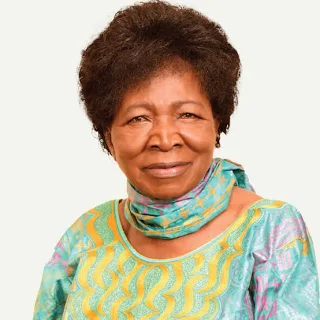
The late Phoebe Asiago.
By Peter Mwibanda
NAIROBI, Kenya — Kenya is mourning the death of Hon. Phoebe Asiyo, a trailblazing politician and one of the country’s most revered advocates for gender equality, whose leadership and legacy reshaped the national landscape for women’s empowerment.
Asiyo, who represented Karachuonyo Constituency, was the first woman to be elected — not nominated — to Kenya’s post-independence Parliament.
Her death marks the end of a remarkable era of public service, civic activism, and global diplomacy.
A fearless advocate of women’s rights, Asiyo began her journey in 1953 when she joined Maendeleo ya Wanawake, then a fledgling organization focused on uplifting Kenyan women.
Five years later, she rose to become its national chairperson, cementing her place as a leading voice in the country’s early women’s movement.
Her grassroots activism provided the springboard for a groundbreaking political career.
Elected during a period when female leadership was rare, Asiyo brought passion and purpose to the male-dominated Parliament of the 1970s and 1980s.
She was a consistent voice for education, social justice, and policies that prioritized women, children, and marginalized communities.
Internationally, Asiyo elevated Kenya’s profile on gender matters, serving as Kenya’s ambassador to the United Nations Development Fund for Women (UNIFEM) from 1988 to 1992.
There, she championed inclusive development and pushed for greater participation of women in socio-economic and political processes.
Beyond Parliament and diplomacy, Asiyo was a key figure in Kenya’s constitutional reform movement.
Long before the 2010 Constitution introduced the two-thirds gender rule, she was already advocating for women’s representation in leadership, affirmative action, and equitable governance.
Her contributions laid the groundwork for a generation of women leaders who now occupy positions in government, civil society, and international organizations. Many credit her mentorship and courage with opening doors that had long remained shut to women.
Asiyo’s influence extended far beyond her constituency. She was a national matriarch, a diplomat of quiet strength, and a reformer whose ideas still guide Kenya’s pursuit of a more inclusive society.
She is survived by her family, a grateful nation, and a legion of women whose dreams and ambitions were nurtured by her example.
No official funeral date had been announced by Thursday evening.
Phoebe Asiyo has taken her final bow — but her legacy will echo through Kenya’s hills and valleys for generations to come.
Ends.