By Mwibanda
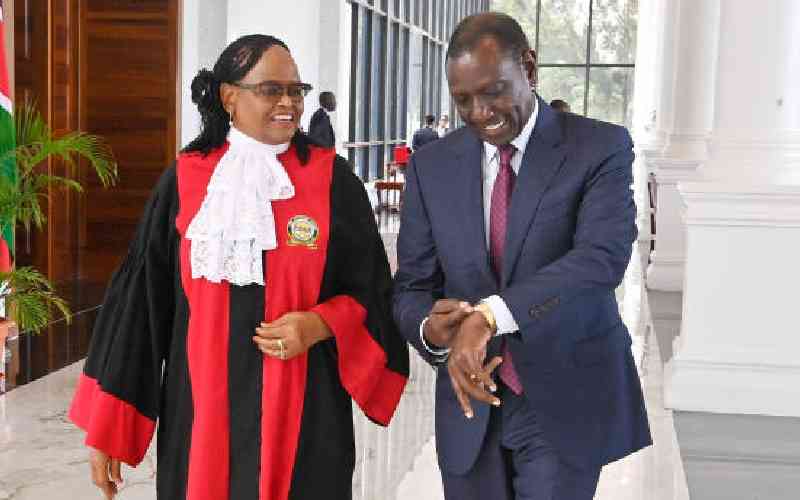
In the two years since the Kenya Kwanza administration took office, President William Ruto’s relationship with the judiciary has shifted from a harmonious partnership to a landscape marked by contention and challenge. What began as a promising collaboration has revealed more friction than finesse as the administration grapples with judicial scrutiny.
The Early Days of Enthusiasm
When the Kenya Kwanza government first assumed power, there was a palpable sense of optimism regarding its relationship with the judiciary. President Ruto and his team initially portrayed a deep respect for judicial independence, hinting at a new era of cooperation and adherence to the rule of law. This period of mutual admiration, however, proved to be fleeting.
The Trials Begin
As the administration’s ambitious agenda unfolded, it quickly became apparent that the judiciary would play a pivotal role in shaping the trajectory of President Ruto’s policies. Projects ranging from economic reforms to large-scale infrastructure plans faced significant legal obstacles. The courts issued several rulings that either halted or altered these initiatives, leading to considerable frustration within the executive branch.
Setbacks and Constitutional Controversies
One of the most pronounced issues has been the administration’s struggle to reconcile its promises with constitutional constraints. President Ruto’s grand pledges, including sweeping economic reforms and development projects, frequently clashed with the provisions of Kenya’s 2010 Constitution. The judiciary has been swift to intervene whenever these promises appeared to encroach upon constitutional principles or procedural norms.
These judicial interventions have not only stalled major projects but have also exposed the administration’s sometimes questionable approach to constitutional adherence. Critics argue that some of the President’s policies have bordered on, or even breached, constitutional limits, prompting judicial reviews designed to safeguard Kenya’s legal framework.
Lessons and the Path Forward
The ongoing tensions between the executive and the judiciary highlight a crucial lesson: the necessity of maintaining a balanced relationship between different branches of government. For Kenya Kwanza, the challenge lies in navigating this complex dynamic while respecting constitutional boundaries.
Reflecting on the first two years of President Ruto’s tenure reveals a governance landscape marked by significant legal and administrative hurdles. As Kenya Kwanza moves forward, the administration must adapt its strategies to better align with legal expectations and practical realities, fostering a more constructive engagement with the judiciary.
In conclusion, the Kenya Kwanza administration’s initial two years have been characterized by notable judicial conflicts, underscoring the need for a balanced approach that respects both the spirit and the letter of the law.