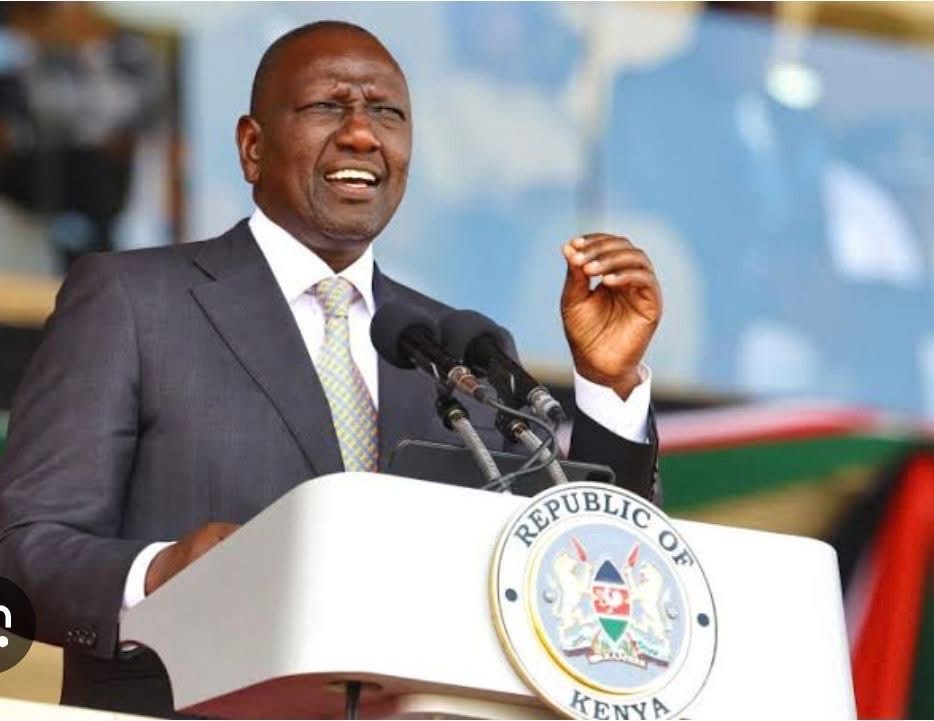
President Dr William Ruto
By Peter Marango Mwibanda
NAIROBI
When President William Ruto signed the amended Computer Misuse and Cybercrimes Act into law, the move was billed as a bold step to protect citizens from online fraud, cyberbullying and digital harassment.
Beneath the language of protection lies a growing fear — that the state may be arming itself with new tools to silence dissent, criminalize satire and punish critics.
The most contentious clause, Section 27, targets what the government calls “cyber harassment” and content “promoting suicide.”
At face value, these provisions appear noble. In practice, however, they have sparked alarm among activists, journalists and mental health advocates who argue that the wording is dangerously vague and constitutionally suspect.
“There is no law that should stop you from being insulted,” says one human rights lawyer.
“Democracy means tolerating uncomfortable speech — even insults. Freedom of expression includes the right to criticize those in power.”
A Law Too Broad for Its Own Good
Under the new law, any communication that “causes another person fear, humiliation, or distress” may be deemed cyber harassment.
Critics warn that this clause is open to abuse, as what counts as “distress” or “humiliation” can depend entirely on who feels offended.
“This is a gift to thin-skinned politicians,” argues a digital rights advocate from the Bloggers Association of Kenya.
“It means a meme, a joke, or a tweet that exposes corruption can now be treated as a criminal act.”
Legal analysts say the section fails to meet the constitutional standard under Article 24, which requires all limitations on rights to be reasonable, necessary, and justifiable in an open and democratic society.
“A vague law is a dangerous law,” says constitutional lawyer Susan Mutua. “It allows selective justice — where the powerful are protected and the powerless are punished.”
Suicide Clause Sparks Mental Health Concerns
Another flashpoint is the law’s attempt to criminalize the “promotion of suicide.” While well-intentioned, the clause fails to define what promotion means.
Mental health experts fear that journalists, content creators, or therapists who discuss suicide prevention or report suicide cases could be unfairly targeted.
“Criminalizing conversations around suicide only deepens stigma,” says psychologist Esther Wekesa. “You cannot punish people into silence and expect healing.”
Freedom of Expression Under Threat
The Kenyan Constitution is explicit. Article 33(1) guarantees every person the right to freedom of expression, including the freedom to seek, receive, or impart information.
The only lawful limits are those protecting national security, public order, or the rights of others — not political egos.
Digital activists argue that these amendments violate both Article 33 and Article 31, which protects the right to privacy and personal data.
They see the cyber law as part of a broader strategy to control the digital space ahead of the 2027 general elections, where online activism — especially among Gen Z — has become a potent political force.
“You cannot jail an entire generation,” says a youth blogger in Nairobi. “You cannot arrest every tweet, delete every conscience, or suspend every idea.
What this regime fears most is the power of an informed and connected people.”
Balancing Security and Liberty
Supporters of the Act insist the changes are necessary to combat online fraud, digital extortion and cyberbullying — crimes that have real victims.
President Ruto defended the law, saying it aims to “protect citizens from digital harm while ensuring responsible use of technology.”
Critics respond that protection must not come at the cost of constitutional freedoms.
Kenya’s challenge, they say, is to craft a cyber law that punishes true criminals — not critics.
In a democracy, the right to offend is not the right to harm. Yet when laws confuse the two, freedom itself becomes the casualty.
Conclusion: The Price of Silence
Kenya’s cyberspace has long been a frontier for free speech, citizen activism and digital journalism.
With this new law, many fear the state is trying to pull the plug on that freedom — quietly, legally and permanently.
As one activist summed it up:
“If the law becomes a shield for the powerful and a weapon against the weak, then it’s not protection — it’s censorship dressed in legal robes.”