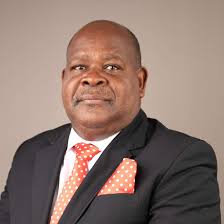
JLAC Chair George Murugaru
By Peter Mwibanda Nairobi (IP)
A political standoff is simmering at the heart of Kenya’s government after George Murugara, chair of the powerful Justice and Legal Affairs Committee (JLAC), publicly dared President William Ruto to name Members of Parliament allegedly bribed with Sh10 million each to derail government business.
The blunt challenge comes amid mounting tension between the legislature and the executive — a relationship long seen as cozy, even complicit.
But Murugara’s defiance has ignited a new conversation: is Parliament finally beginning to push back?
And more urgently, is this the first visible crack in the alliance that helped Ruto weather the Gen Z-led digital rebellion that shook the country in July?
> “The President must stop generalizing. If he has evidence that MPs were bribed, let him present it.
Let him name them,” Murugara declared during a press briefing at Parliament Buildings.
His statement comes just days after Ruto accused unnamed lawmakers of receiving Sh10 million bribes to reject key government proposals — a claim that, if true, could implicate Parliament in serious corruption.
But without evidence, it appears to many as a calculated move to deflect from the executive’s own growing integrity crisis.
A House Divided?
The fallout highlights an increasingly uneasy relationship between the two arms of government.
Traditionally, Parliament has operated in sync with the executive, often rubber-stamping controversial bills — including the now-withdrawn Finance Bill 2024, which sparked a nationwide youth uprising.
But with public pressure mounting and MPs facing backlash in their own constituencies the dynamics are shifting. What once looked like loyalty may now be exposed as political survival.
“This isn’t just about bribery — it’s about respect,” said one MP allied to Kenya Kwanza who requested anonymity. “We are being publicly shamed by the very administration we helped put in office.”
Legislative Independence Under Fire
Murugara’s response is being hailed by some observers as a rare moment of institutional backbone.
Kenya’s Parliament has long struggled with perceptions of being a puppet of the executive, especially under Ruto’s administration which has leveraged its majority and regional alliances to dominate the legislative agenda.
But recent weeks have seen lawmakers begin to assert their independence — first by opposing the Finance Bill, and now by resisting blanket accusations.
“The President can’t expect obedience without accountability,” said constitutional lawyer Karimi Njoki.
“Murugara’s challenge is a shot across the bow. It signals that the era of unquestioning loyalty may be over.”
A Post-Gen Z Political Landscape?
The timing of this rupture is telling. After the Gen Z protests rocked the country, exposing deep frustrations over governance, corruption, and economic hardship, the executive has been on the defensive.
President Ruto has made high-profile pledges to listen, reform, and clean house. But critics argue those efforts are largely performative — especially as the executive remains dogged by scandals, including controversial procurement deals, opaque spending, and a bloated cabinet.
For a time, Parliament seemed to back the president out of political expediency. But the public’s growing anger may now be reshaping priorities.
“With voters watching closely, MPs know they can’t keep shielding the presidency without consequences,” said Nairobi-based political analyst Eric Mwangi. “Murugara may be the first, but he won’t be the last to push back.”
The Stakes Ahead
Whether President Ruto will name the implicated MPs remains to be seen.
His silence so far suggests a strategic retreat — or perhaps a lack of credible evidence to begin with. Either way, the damage is done.
The episode has reopened deep concerns about the integrity of Parliament, but also about the executive’s respect for constitutional checks and balances.
For a presidency that has leaned heavily on a cooperative Parliament to drive its agenda, this could mark the beginning of a messy — and potentially consequential — political recalibration.
Bottom Line:
George Murugara’s bold demand that President Ruto name names may be more than a political stunt.
It could be a sign that Kenya’s Parliament — battered by public mistrust and Gen Z fury — is finally finding its spine.
And if this moment turns into a movement, the balance of power at the heart of Kenya’s government could be about to shift
Ends.