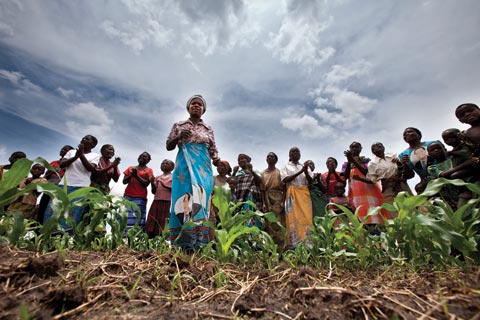
By Mwibanda
In many parts of the world, women play an integral role in agriculture, working tirelessly to ensure their families have enough to eat. For these women, farming is not just a livelihood; it is a means of survival. However, despite their central role in food production, women are often systematically denied land rights, leaving them vulnerable and limiting their ability to provide for their families.
The Role of Women in Farming
Across rural communities, women are the backbone of agricultural production. They are responsible for cultivating food crops, caring for livestock, and managing household gardens. Much of this work focuses on subsistence farming—growing enough food to feed their families. However, when it comes to cash crops, which generate income, it is often the men who control the land and profits. This unequal division of responsibilities and benefits highlights the gender disparities that persist in farming communities.
Barriers to Land Ownership
One of the most significant challenges women face is the lack of land ownership. In many cultures, land is traditionally passed down through male heirs, excluding daughters and wives. Customary laws and patriarchal norms tend to prioritize men’s ownership, sidelining women’s rights to land. Even in cases where women legally inherit land, they are often pressured by cultural expectations and male relatives to relinquish their rights.
In addition to cultural barriers, institutional obstacles make it even harder for women to claim ownership. Land titling processes are often expensive, bureaucratic, and discriminatory, which limits women’s ability to formally own property. Without official ownership, women are unable to access credit, agricultural inputs, or government support programs, which further hinders their ability to farm effectively and sustainably.
The Impact on Families
When women lose access to land, entire families suffer. Food security is compromised as women struggle to produce enough food to nourish their children. Without the ability to cultivate cash crops or generate income from farming, women are unable to afford necessities such as school fees, healthcare, and other essentials.
This creates a cycle of poverty and inequality. Children, particularly girls, are often the most affected. In many cases, they are forced to drop out of school to help with household chores or farming duties. The lack of land rights for women thus has far-reaching consequences that extend well beyond the immediate household, perpetuating gender inequality and reducing opportunities for future generations.
Urgent Action Needed
Addressing the loss of land rights for women requires a multifaceted approach:
Legal Reforms: Governments must implement and enforce laws that ensure gender equality in land ownership and inheritance. Women’s rights should be explicitly protected in land policies to prevent discrimination.
Community Awareness: Advocacy campaigns should aim to challenge cultural norms that discriminate against women. Community leaders, especially men, must be involved in promoting gender equity and shifting the cultural narrative about women’s roles in land ownership.
Support Systems: Women need access to affordable legal services to defend their land rights. Additionally, financial assistance programs, agricultural training, and improved market access can empower women to become more successful farmers and entrepreneurs.
Data and Research: Governments and organizations must invest in research to better understand the scope of the issue by collecting data on women’s land ownership. This will help design more targeted interventions and ensure the issue is addressed comprehensively.
A Call for Equity
Women’s land rights are not just a matter of fairness—they are essential for ensuring food security, reducing poverty, and promoting sustainable development. By addressing the cultural, legal, and institutional barriers that prevent women from owning land, we can empower them to provide for their families, contribute to their communities, and build a brighter future for the next generation.
It is time for societies to recognize that women’s access to land is not optional—it is a fundamental right that must be upheld. Ensuring women’s land rights is an investment in food security, economic growth, and social equity, one that will create stronger, more resilient communities worldwide.