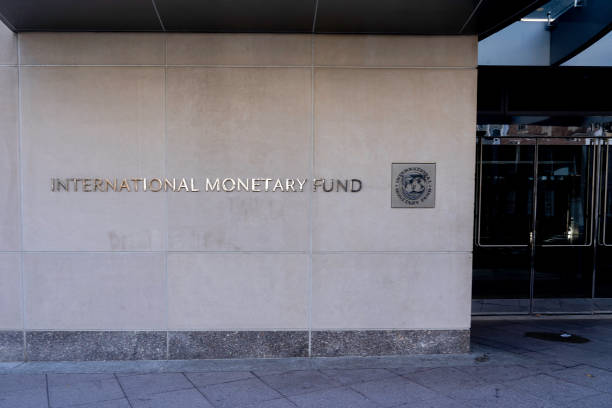
I.M.F.headquaters,Washingtone D.C.
By Peter Mwibanda.
For decades, Africa has been a spectator in a global financial system designed and dominated by Western powers.
From Bretton Woods institutions like the International Monetary Fund (IMF) and World Bank to trade policies favoring developed economies, Africa has often found itself on the receiving end of an inequitable system that perpetuates dependency and underdevelopment.
As the world faces unprecedented economic challenges—climate change, global debt crises, and shifting geopolitical alliances—it is time for Africa to take a leadership role in advocating for a new global financial order.
The Current Global Financial System: A Flawed Model.
The global financial architecture was established in the aftermath of World War II to stabilize economies and promote development.
However, it has largely failed to address the unique needs of developing countries, particularly in Africa.
1. Debt Dependence.
Many African nations are trapped in cycles of debt driven by high-interest loans from global institutions and private creditors.
According to the World Bank, over 60% of low-income countries, many in Africa, are at high risk of debt distress.
Debt servicing leaves little room for investments in health, education, and infrastructure.
2. Unfair Trade Systems.
The dominance of Western markets and the marginalization of African economies in global trade negotiations have stifled Africa’s ability to benefit from its own resources.
Countries remain exporters of raw materials while importing expensive finished goods, perpetuating a trade imbalance.
3. Climate Financing Gaps.
Although Africa contributes less than 4% of global greenhouse gas emissions, it bears the brunt of climate change.
Yet, the promised $100 billion annually in climate financing from developed nations remains unmet, leaving African nations struggling to adapt and recover.
Why Africa Must Champion a New Order.
1. A Rising Economic Power
Africa is home to some of the fastest-growing economies in the world, a youthful population, and immense natural resources.
By 2050, the continent’s population is projected to reach 2.5 billion, making it a critical player in global economic growth.
A new financial order that acknowledges Africa’s potential is not just fair—it is necessary.
2. Global Multipolarity
The emergence of new economic powers like China, India, and Brazil has already begun to challenge the West’s financial dominance.
Africa can leverage this multipolar world to push for reforms that ensure its voice is heard and its needs prioritized.
3. The AU’s Growing Influence
The African Union (AU) has shown increasing political and economic coordination, exemplified by initiatives like the African Continental Free Trade Area (AfCFTA).
Africa is better positioned than ever to act as a bloc in global negotiations.
What a New Global Financial Order Should Look Like.
1. Reforming Bretton Woods Institutions.
Africa must advocate for greater representation and voting power within the IMF and World Bank to ensure its interests are adequately represented. Policies should shift from austerity-focused programs to development-driven investments.
2. Debt Restructuring and Cancellation.
A new framework for debt management should prioritize sustainable financing.
This includes canceling odious debts and restructuring existing ones to allow African nations to invest in long-term development.
3. Fair Trade and Value Addition.
Africa needs trade policies that promote industrialization and value addition rather than dependency on raw material exports.
This will require revisiting global trade agreements and fostering regional integration through AfCFTA.
4. Climate Justice.
A reimagined global financial order must address historical inequities by ensuring that Africa receives its fair share of climate financing.
This includes grants rather than loans for adaptation and mitigation projects.
The Role of African Leadership.
To champion a new financial order, African leaders must demonstrate unity and boldness.
Corruption, poor governance, and internal divisions have often undermined the continent’s ability to negotiate effectively on the global stage.
A united front through the AU and strategic alliances with other Global South countries will be critical.
Conclusion.
The time is ripe for Africa to take its rightful place in shaping a global financial system that works for all.
The current order is outdated and inequitable, perpetuating cycles of poverty and dependency.
Africa’s leaders, together with its rising youthful population, must push for reforms that prioritize fairness, sustainability, and shared prosperity.
Championing a new global financial order is not just a moral imperative—it is an economic necessity for a continent that holds the key to the 21st century’s growth.
The question is not whether Africa can lead this change, but whether it will seize this historic opportunity to do so.
Ends.