By Peter Mwibanda
Political and legal analyst.
The intellectualspost.
NAIROBI, Kenya (IP)
Politics rewards those who recognise opportunity before everyone else. Few politicians have demonstrated that instinct in recent months more than Nairobi Senator Edwin Sifuna.
Not long ago, Sifuna was largely viewed as an outspoken opposition senator and the Secretary-General of ODM. His name rarely featured prominently in discussions about the leading figures who could shape Kenya’s 2027 presidential race. Today, however, the political landscape appears markedly different.
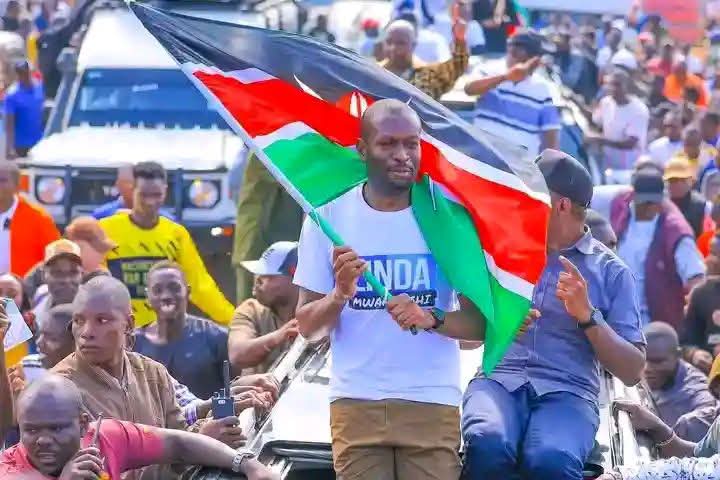
Through his increasingly visible tours across Western Kenya and his “Linda Mwananchi” mobilisation campaign, Sifuna has emerged as one of the country’s most talked-about opposition figures.
Large public gatherings and growing youth engagement have elevated his national profile, forcing both allies and rivals to reassess his political weight.
The movement has projected Sifuna beyond his Nairobi political base into regions traditionally dominated by long-established political heavyweights. That expansion has inevitably unsettled established leaders whose influence once appeared secure.
His strategy differs from conventional Kenyan politics. Rather than relying primarily on ethnic bargaining or elite negotiations, Sifuna has consistently framed his message around governance, accountability, constitutionalism and the everyday economic struggles facing ordinary Kenyans.
Whether this message ultimately translates into votes remains uncertain, but it has succeeded in capturing public attention.
For President William Ruto’s allies, Sifuna represents another unpredictable variable in an already complex electoral equation.
The ruling coalition continues to navigate shifting political alliances across several regions, while the opposition seeks a unifying figure capable of mounting a credible challenge in 2027.
Within the opposition itself, Sifuna’s rise also introduces fresh political calculations.
Every emerging national figure inevitably alters the balance of influence among opposition leaders competing for prominence.
His growing popularity could strengthen coalition-building efforts, but it may also intensify competition over leadership roles.
The inevitable comparison is with ODM leader Raila Odinga. Like Raila during earlier phases of his political career, Sifuna has increasingly positioned himself as a national campaigner rather than a regional politician.
Whether he ultimately follows a similar trajectory remains an open question.
Perhaps the more immediate question is not whether Edwin Sifuna becomes Kenya’s next presidential candidate but whether he becomes the decisive kingmaker capable of influencing who ultimately occupies State House.
Kenyan politics has repeatedly shown that elections are shaped not only by those on the ballot but also by those who redefine the national conversation. Sifuna appears determined to be one of those figures.
Whether history remembers him as a political disruptor, a kingmaker or a future presidential contender will depend on his ability to transform growing public enthusiasm into durable political organisation.
For now, one conclusion is increasingly difficult to dismiss: Edwin Sifuna has moved from the political sidelines to the centre of Kenya’s unfolding 2027 succession debate.
Ends.