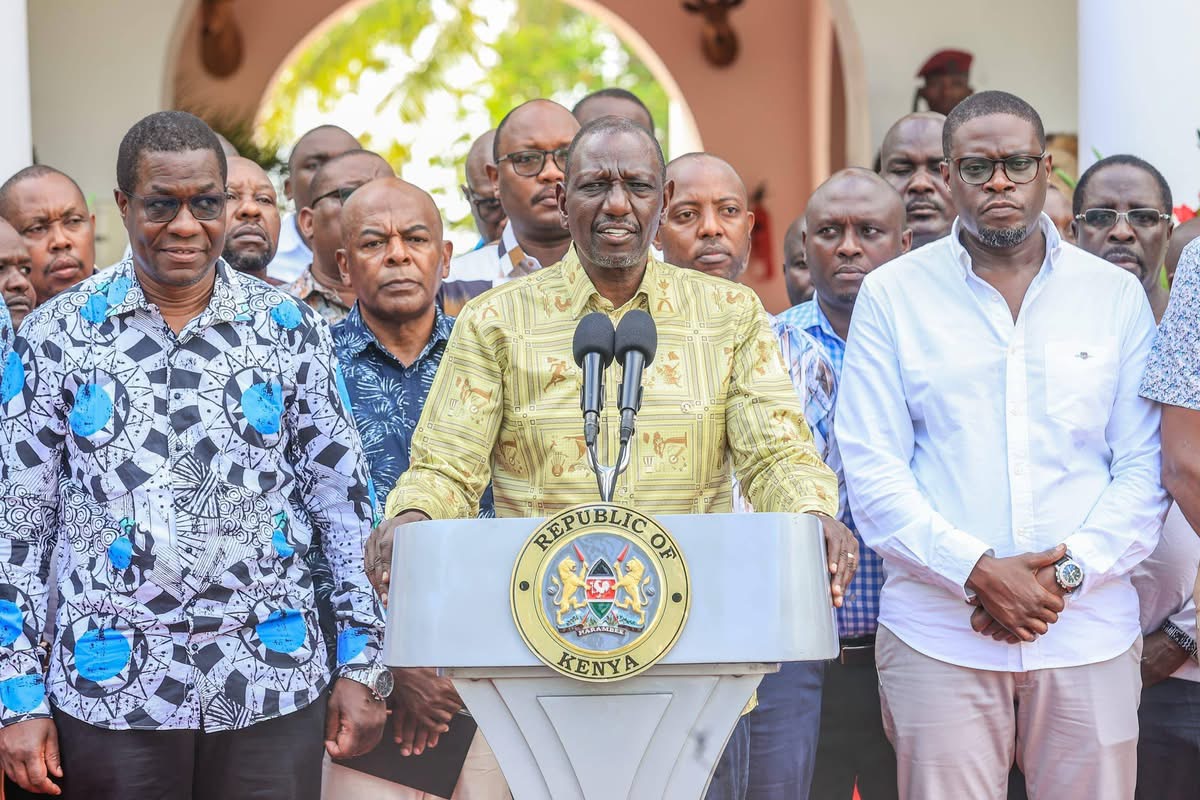
President Ruto addressing the nation from statehouse Mombasa on Friday….Photo/courtesy
ALEX WEKESA
President William Ruto has warned political leaders against exploiting the suffering of Kenyans for political mileage amid the ongoing fuel crisis and public transport disruptions in the country.
Speaking after holding talks with public transport stakeholders, Ruto said leaders should focus on finding solutions to the economic challenges facing citizens instead of using the crisis to gain popularity.
His remarks came as the government announced a reduction in diesel prices following nationwide protests and a matatu operators’ strike that had paralysed transport services in Nairobi and other towns.
The fuel crisis has triggered widespread anger across Kenya after diesel prices rose sharply in the latest Energy and Petroleum Regulatory Authority review.
Public transport operators staged a two-day strike earlier this week, causing major disruptions in business activities, schools, and daily commuting.
The demonstrations also turned violent in some parts of Nairobi, leaving at least four people dead and dozens injured during clashes between protesters and police.
Former Deputy President Rigathi Gachagua has been among opposition leaders sharply criticizing the government over the rising fuel costs and the handling of the transport crisis.
Gachagua accused the Kenya Kwanza administration of failing to listen to ordinary Kenyans and claimed the temporary suspension of the matatu strike would not solve the underlying economic problems affecting citizens.
The former deputy president further alleged that the government’s fuel importation system had contributed to the high fuel prices, claims that the government has denied.
He also criticized President Ruto for what he termed as misplaced priorities during a period of economic hardship.
However, President Ruto defended his administration, saying the government had already spent billions of shillings on fuel subsidies to cushion consumers from global oil price shocks.
He maintained that Kenya had avoided severe fuel shortages due to government-to-government fuel supply agreements signed with Middle Eastern countries.
Following negotiations with the government, matatu operators called off plans to continue the nationwide strike after the president pledged further reductions in diesel prices in the coming fuel review cycle.