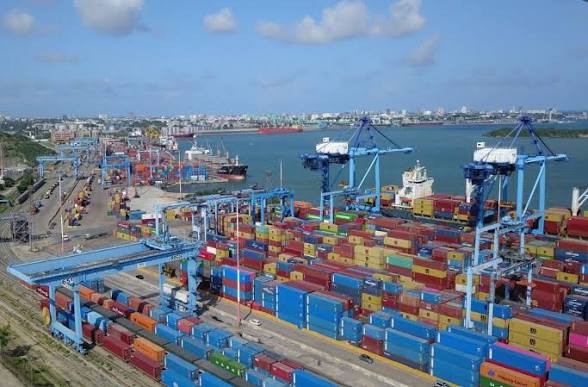
The Kenya Ports Authority,Mombasa
By James Wekesa.
President William Ruto has announced a duty-free waiver on the first 100,000 electric vehicles (EVs) imported into Kenya to combat rising fuel costs.
Importers must submit a KEBS pre-shipment inspection certificate, a valid Import Declaration Form (IDF) and a KRA tax exemption certificate.
To claim the duty-free EV waiver at the Port of Mombasa, an importer must navigate Kenya’s automated customs system and secure specific regulatory approvals.
Step 1: Secure Pre-Export Inspection
Obtain a Certificate of Roadworthiness (CoR) from a KRA-approved inspection agency (like QISJ) in the country of origin.
Ensure the vehicle’s battery health and technical specifications are explicitly documented on the inspection certificate.
Step 2: Lodge the Customs
DeclarationContract a licensed Customs Clearing Agent to log into the Integrated Customs Management System (iCMS).
Upload the Bill of Lading, Commercial Invoice, and the CoR.
Step 3:
Apply for the Specific Tariff Exemption
Select the designated Harmonized System (HS) Code for pure electric vehicles (typically under HS Heading 8703.80.00).
Enter the specific Exemption Code tied to President Ruto’s 100,000 EV duty-free directive into the iCMS system to automatically drop the 10% import duty rate to zero.
Step 4: Obtain Ministry of Transport
Verification
Submit the iCMS declaration copy to the State Department for Transport for validation.
The Ministry verifies that the vehicle falls within the 100,000 quota allocation before issuing an electronic approval back to KRA.
Step 5: Pay Residual Taxes and Port Charges
Pay the remaining mandatory non-duty levies via iCMS, including the Import Declaration Fee (IDF) and the Railway Development Levy (RDL).
Settle the 16% VAT (unless a specific Finance Bill VAT exemption voucher is attached) and standard Kenya Ports Authority (KPA) wharfage fees.
Step 6: Physical Verification and Release
Present the electronic release order to KRA customs officers at the port for physical verification.
Once the chassis number and electric motor specs match the documentation, the vehicle is cleared for registration with the National Transport and Safety Authority (NTSA).