By Staff Writer
NAIROBI, Kenya (IP)
In Kenya’s ever-creative arena of political arithmetic, roads have become the latest blackboard — and not everyone agrees on who is better at math.
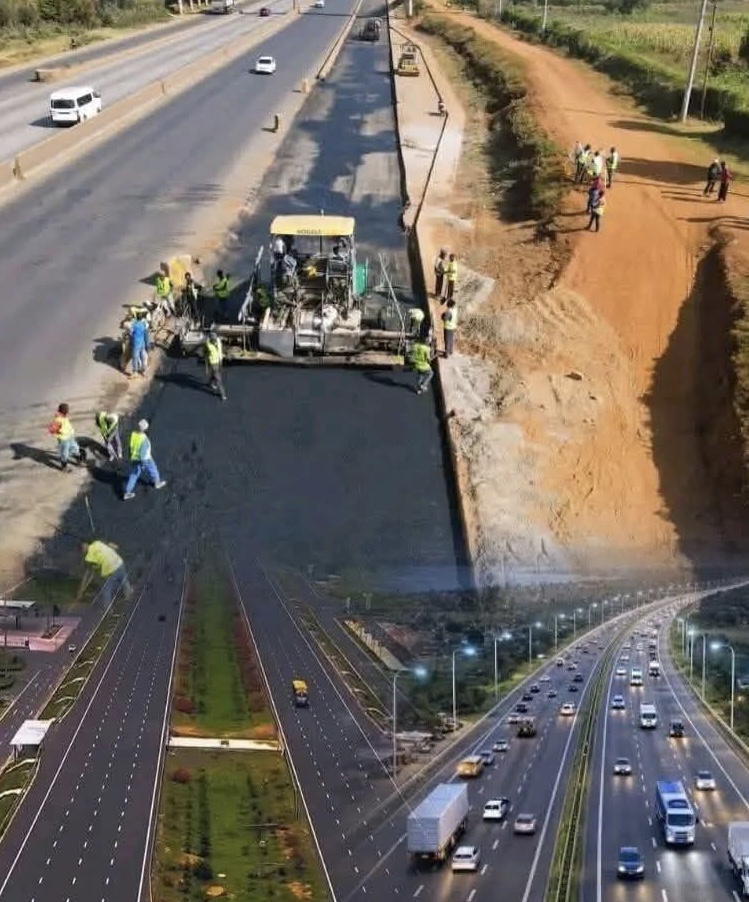
A comparison circulating widely, attributed to commentator John Kinyanjui, contrasts the 27-kilometre Nairobi Expressway built under former President Uhuru Kenyatta with the ongoing Rironi–Mau Summit Road under President William Ruto — and the numbers are doing what numbers do best: causing arguments.
The expressway, a four-lane toll road, cost about KSh 88 billion, translating to roughly KSh 3.25 billion per kilometre.
By contrast, the Rironi–Mau Summit project — a combined 233 kilometres including key link roads — is priced at about KSh 187 billion, or less than KSh 1 billion per kilometre.
Some sections, notably Nairobi to Naivasha, are planned as six lanes.
On paper, it looks like a clearance sale on tarmac.
“This is what efficiency looks like,” said transport economist Peter Mwangi, who supports the comparison. “You’re getting longer distances, wider sections in parts, and at a lower per-kilometre cost. If anything, it suggests improved cost discipline.”
A Nairobi-based quantity surveyor, Jane Wairimu, echoed the sentiment, noting that differences in terrain, financing models and design standards can influence pricing — but not enough to ignore the gap.
“Even after adjusting for variables, the cost contrast raises valid questions. It’s something professionals can verify through public procurement records.”
Not everyone is buying the bargain narrative.
Infrastructure analyst David Ochieng dismissed the comparison as “political math dressed up as engineering.”
He pointed out that the expressway was an elevated, toll-financed urban highway cutting through dense city infrastructure.
“You’re comparing a high-speed viaduct in a capital city to a largely ground-level intercity highway. That’s apples and, frankly, flying apples,” he said.
Still, the comparison has found an eager audience online, where irony travels faster than traffic on Waiyaki Way.
Supporters of the current administration argue it proves prudent use of public funds, while critics insist context matters — loudly.
And therein lies the twist: one project hailed as a symbol of modern infrastructure, the other dismissed in some quarters despite appearing, at least numerically, more economical.
So Kenyans are left with a familiar dilemma — not whether roads are being built, but which numbers to trust, which leaders to credit, and whether a kilometre is ever just a kilometre in politics.
As the debate rolls on, one thing is clear: in Kenya, even the roads come with competing lanes of interpretation.