By Peter Marango Mwibanda
NAIROBI, Kenya (IP)
As Ramadan approaches its final days, millions of Muslims across the world enter what is widely regarded as the most sacred and spiritually intense period of the Islamic holy month.
The last 10 nights of Ramadan are marked by heightened prayer, deeper reflection on the Quran and a profound quest for forgiveness and divine mercy.
For Muslims, these nights represent the spiritual climax of a month defined by fasting, charity and devotion. Worshippers often extend their nightly prayers, engage in prolonged recitation of scripture and dedicate long hours to contemplation and repentance.
Islamic tradition records that Muhammad increased his acts of worship during these final nights more than at any other time of the year.
Scholars say he spent much of the nights in prayer and spiritual reflection, encouraging believers to seek closeness to God and to intensify their devotion during this sacred window.
At the heart of the final 10 nights lies the search for Laylat al-Qadr, or the Night of Power.
According to Islamic belief, this is the night when the Quran was first revealed to the Prophet Muhammad.
The Quran describes the night as “better than a thousand months,” making it one of the most spiritually significant moments in Islam.
Because its exact date is unknown, Muslims are encouraged to seek it during the odd-numbered nights of the final 10 days of Ramadan.
The uncertainty itself drives believers to maintain continuous devotion, ensuring that no opportunity for divine reward or forgiveness is missed.
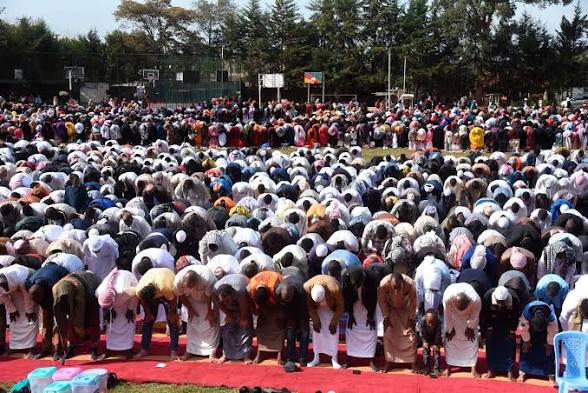
During these nights, mosques around the world remain open late as worshippers gather for extended prayers known as Qiyam al-Layl or Tahajjud.
In many communities, believers spend much of the night reading and reflecting on the Quran, seeking guidance and spiritual renewal.
Religious scholars emphasize that the significance of the final days of Ramadan goes beyond ritual observance.
The period calls for deep personal accountability, urging believers to repair relationships, show compassion to the needy and renew their commitment to justice and humility.
“The final nights of Ramadan are a reminder that faith must transform both the heart and society,” said Sheikh Abdallah Hassan, an Islamic teacher in Nairobi. “They invite believers to seek forgiveness while recommitting themselves to values of mercy, honesty and service to others.”
Across the Muslim world — from the Middle East to Africa, Asia and Western nations with growing Muslim communities — the closing days of Ramadan bring a noticeable shift in spiritual focus.
Mosques fill with worshippers late into the night, families gather for prayer and acts of charity increase as believers seek to end the holy month on a spiritually elevated note.
In Kenya, where Ramadan is widely observed among Muslim communities, mosques in major cities including Nairobi and Mombasa report larger night congregations during this final phase of the fasting month.
For believers, the closing nights of Ramadan are more than a ritual tradition. They are a powerful invitation to pause, reflect and seek renewal — a moment when faith, humility and hope converge in the quiet hours before dawn.
As Ramadan draws toward its conclusion, Muslims worldwide continue their search for spiritual clarity, trusting that within these sacred nights lies an opportunity for forgiveness, transformation and a renewed connection with the divine message of the Quran.