By IP Reporter — Nairobi
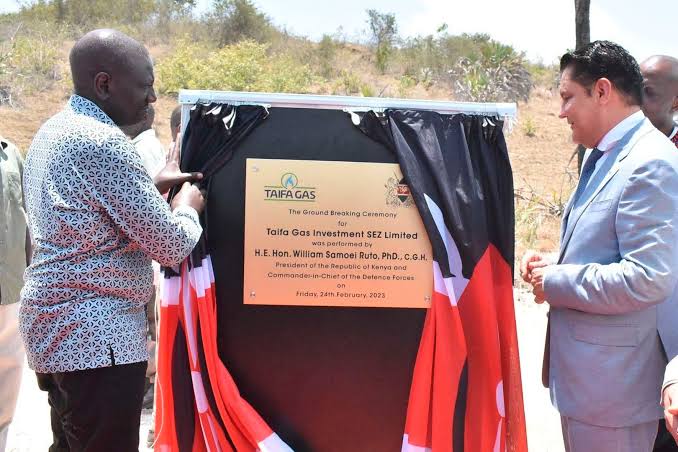
President William Ruto has pointed to the Taifa Gas LPG terminal as one of the earliest economic bets of his administration, launched in 2023 at a time when political rivals were busy trading press conferences and protest slogans over the cost of living.
The Sh16 billion project, located at the Dongo Kundu Special Economic Zone in Mombasa, broke ground as Ruto and opposition leader Raila Odinga were locked in a public tug-of-war over who truly understood the price of unga, fuel and gas.
While critics dismissed the project as “optics,” the government quietly poured concrete.
Now about 80 percent complete, the facility is expected to be Africa’s largest LPG terminal, with storage capacity of 30,000 metric tonnes, expandable to 45,000 tonnes, a scale officials say will finally end chronic import bottlenecks that routinely push cooking gas prices beyond the reach of low-income households.
Ruto has framed the project as a direct intervention for urban slums, rural homes and informal settlements, where families routinely cycle between charcoal, kerosene and half-empty gas cylinders depending on which fuel is cheapest that week.
Increased storage and competition, he has argued, will stabilize supply and drive prices down — a concept critics appear to oppose without offering an alternative that involves actual gas.
During the project’s launch, Ruto said every Kenyan household should have access to cooking gas, promising tax relief and policy changes to make LPG cheaper and cleaner than traditional fuels.
He has repeatedly said the shift would protect forests, reduce indoor air pollution and ease the daily burden on women and children who spend hours sourcing firewood.
Opponents initially questioned the timing of the investment, suggesting the country needed speeches more than storage tanks.
Supporters countered that speeches do not cook food — and that shouting at roundabouts does not lower LPG prices.
For vulnerable households, the government says the impact will be felt in lower refill costs, shorter supply disruptions and reduced dependence on smoky fuels that dominate low-income neighborhoods.
Officials estimate refilling costs could fall sharply once the terminal is operational, potentially saving households thousands of shillings annually.
The terminal is scheduled for completion in March 2026, long after the political noise of 2023 has faded.
By then, Ruto’s allies say, the argument will no longer be about ideology — but about whether gas is affordable, available and actually lighting kitchens where it matters most.