By Peter Marango Mwibanda
NAIROBI, Kenya
Kenya is sliding into a political vacuum disguised as stability, and 2026 is the year when the illusion is beginning to crack.
While attention remains fixated on the 2027 general election, a far more consequential reckoning is unfolding in the shadows.
The coming year is not a political footnote; it is the moment when governance failures harden into lived reality and when the absence of leadership — both in government and opposition — becomes impossible to ignore.
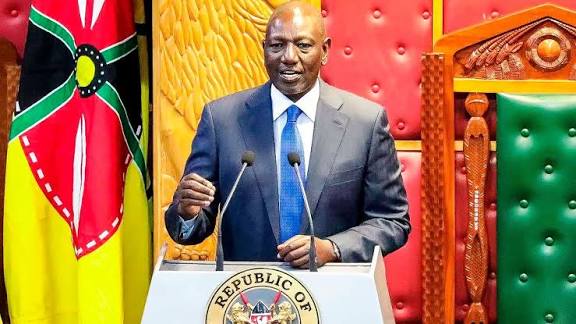
The economy has not merely underperformed; it has openly defied the promises that carried President William Ruto to power.
Taxes have risen sharply, the cost of living has escalated, and public confidence has eroded. For ordinary Kenyans, the rhetoric of economic transformation has collapsed into daily survival. What was marketed as reform now feels punitive.
This is not simply an economic crisis. It is a breach of trust.
The Kenyan state appears to have reneged on its social contract — demanding sacrifice without protection, patience without progress.
Public services remain strained, youth unemployment festers, and small businesses are suffocating under fiscal pressure. Yet accountability is conspicuously absent.
In response, the government has chosen movement over meaning. The president is omnipresent across the national landscape — commissioning projects, announcing initiatives, reshuffling narratives.
But constant motion has become a substitute for results. Optics now dominate governance, masking a regime that seems increasingly unsure of its economic philosophy and politically intolerant of dissent.
For an international audience, the warning signs are familiar. Governments that mistake visibility for legitimacy eventually lose both.
More alarming, however, is the failure of Kenya’s opposition. At a time when democratic systems rely on countervailing power, the opposition has retreated into confusion and self-interest.
Rather than articulate a clear alternative, it has fragmented into ambiguous messaging and premature succession battles. The result is a governing elite operating with minimal resistance.
When opposition abdicates its role, power consolidates unchecked. Parliamentary oversight weakens. Policy shifts go unexplained.
Public anger is dismissed as political noise. This is how democratic erosion begins — not with tanks on the streets, but with silence in institutions meant to speak.
The central question of 2026 is brutally simple: does President Ruto still listen to the country he governs?
National tours cannot conceal economic distress. Defiant speeches cannot neutralize public frustration. Leadership is not measured by how loudly a government speaks, but by how seriously it responds when citizens can no longer cope.
Equally pressing is whether the opposition will rediscover its purpose — to defend the public interest, not personal ambition.
Kenya does not need symbolic resistance or recycled slogans. It needs a coherent electoral question anchored in economic justice, constitutionalism and accountability.
Absent that, 2027 risks becoming an election without meaning, contested in a landscape already hollowed out by policy failure and democratic fatigue.
History often turns not on dramatic events, but on ignored years — moments when nations drift while leaders posture. Kenya’s 2026 is shaping up to be such a year.
The danger is not instability.
The danger is normalization — of economic pain, of political indifference, and of a leadership class that no longer feels compelled to explain itself.
For Kenya, and for a region already grappling with democratic backsliding, that should concern the world.