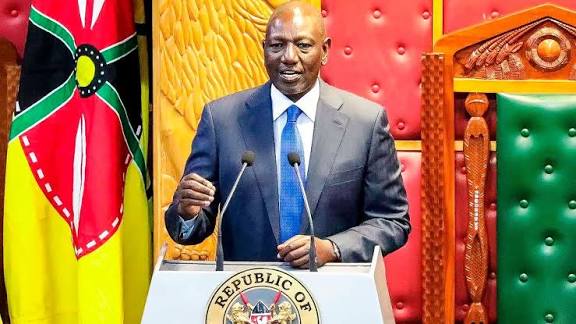
President Dr William Ruto….Photo /courtesy
By Peter Mwibanda
A political Legal Analyst | Investigative Features
The Intellectuals Post
NAIROBI, Kenya
When President William Ruto took office in September 2022, he promised a Bottom-Up Economic Transformation that would lift informal workers, expand jobs and restore dignity through healthcare and education.
Nearly three years later, that vision appears eclipsed by shifting narratives, aggressive borrowing and complex financial vehicles that critics say benefit boardrooms more than households.
At the center of the debate is the newly approved Ksh5 trillion National Infrastructure Fund (NIF), pitched as an innovative way to mobilize private capital and protect national assets.
Government officials say the fund will fast-track roads, rail and power projects without burdening citizens with new taxes.
Yet legal experts, economists and civic groups warn it risks weakening constitutional safeguards and reducing parliamentary oversight over public money.
The Bottom-Up agenda initially resonated because it reflected Kenya’s reality: widespread informality, inequality and barriers to credit and jobs.
Today, however, mega-projects — expressways, smart cities and expanded rail — dominate policy, even as inflation, weak purchasing power and limited formal job growth persist.
Official data shows most new employment remains informal and insecure.
Critics argue the NIF’s structure removes funds from the Consolidated Fund, shielding them from Parliament and independent audits.
Constitutional lawyer Willis Otieno has warned this concentration of power in the executive may violate public finance laws.
Concerns have grown after plans to sell stakes in profitable state assets, including Safaricom, to seed the fund.
The government has also launched a Sovereign Wealth Fund, billed as intergenerational savings.
Opponents counter that, without strong institutions, such tools risk becoming elite buffers rather than public safeguards.
Kenya’s leaders often cite Singapore as inspiration, but analysts note Singapore’s success rested on strong institutions, transparency and social investment — not slogans alone.
As debate over the NIF intensifies, Kenya faces a choice: recommit to inclusive, accountable growth, or pursue legacy infrastructure projects whose benefits for ordinary citizens remain uncertain.