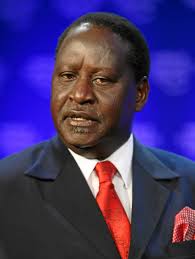
The late Raila Odinga promoted nationalism and equity
By Peter Mwibanda
NAIROBI, Kenya —IP
Kenya’s claim to sovereignty is hollow if nationhood is still defined by tribe.
A government that works for all Kenyans cannot be built on the logic of exclusion. Justice cannot be ethnic.
Accountability cannot be tribal. Equity cannot be negotiated through the narrow lens of belonging.
For decades, Kenya’s politics has been a marketplace where identity is traded for patronage.
Elections too often become referendums on ethnicity rather than contests of ideas, competence and character.
The result is predictable: public institutions hollowed by favoritism; budgets diverted to reward loyalty; policies framed to consolidate narrow interests rather than to solve national problems.
Sovereignty is not merely a legal status. It is a living relationship between a people and the institutions that serve them.
True sovereignty demands that citizens place the national interest above sectional advantage and that leaders answer to values, not clans.
When voters choose representatives primarily because they share a surname or a dialect, the nation loses; when leaders distribute power as if it were personal property, sovereignty is surrendered.
The first step toward reclaiming sovereignty is a cultural shift in civic expectations.
Voters must insist on competence, integrity and a track record of service. Value-based leadership — leaders selected for demonstrated commitment to the rule of law, inclusive economic policies and transparent governance — must become the norm, not the exception.
This requires reimagining political campaigns: policy debates instead of identity rallies; issue-based manifestos instead of lists of tribal appeasements.
Institutions must follow. Electoral reforms that reduce winner-takes-all dynamics, strengthen party ideology and incentivize cross-ethnic coalitions will make it harder for politicians to win on tribalist platforms.
Civil service rules that prioritize merit over connections, and anti-corruption measures that punish impunity regardless of patronage networks, will restore faith in public institutions.
Laws and structures alone are insufficient; public morality must change.
Citizens must refuse the small betrayals — votes traded for promises of narrow benefit — that cumulatively erode national sovereignty.
Critics will say that identity politics is an unavoidable fact of Kenya’s social fabric.
They are right — identity matters. But identity should inform representation, not determine it.
A leader who understands and respects ethnic identities can still be judged on the universal merits of their governance.
The point is not to erase culture but to prevent culture from becoming a cover for exclusionary power.
Sovereignty also requires economic inclusion.
When opportunity is perceived as the preserve of particular groups, resentment hardens and democratic norms fray.
Policies that broaden access to land, capital, education and jobs are not charity; they are national security.
Equity is not about equal handouts — it is about creating a fair starting line so talent across communities can contribute to the common good.
Finally, faith in the national project depends on a public square where accountability is real and impartial.
The courts, audit institutions, and oversight bodies must be insulated from tribal politicization.
Truth must be treated as an obligation, not an inconvenience.
Leaders must be held to measurable promises, and citizens must hold them to account with the same fervour they reserve for identity grievances.
Kenya’s sovereignty will be affirmed not by speeches about unity, but by everyday choices: a voter choosing competence over kinship; a journalist exposing nepotism; a judge ruling against a popular patron; a civil servant refusing to subvert rules for a powerful caller.
These small acts aggregate into a political culture that values the nation above the tribe.
The challenge is daunting, but the stakes are existential.
If Kenyans do not outgrow the politics of belonging, sovereignty will remain theoretical — a paper claim vulnerable to the first crisis of patronage.
If they succeed, Kenya can model a plural democracy where diversity is a strength, not an excuse for division.
The choice is simple and urgent: build a Kenya where leaders are chosen for values and performance — or keep electing custodians of narrow interests and watch sovereignty slip away.