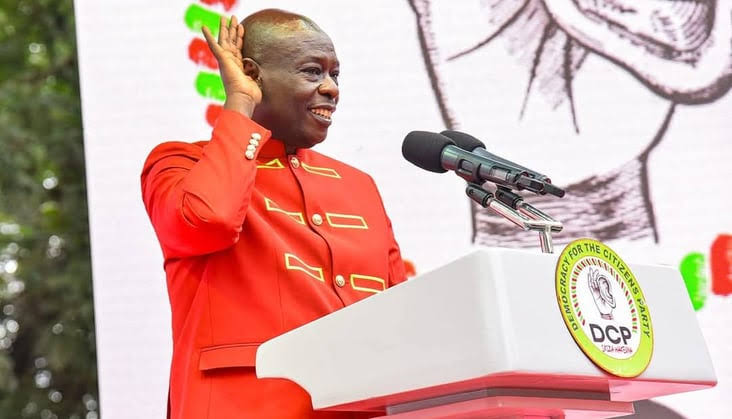
DCP leader Rigathi Gachagua
By peter mwibanda
NAIROBI, Kenya (IP)
A political and legal storm is brewing as the Senate moves to block former Deputy President Rigathi Gachagua from contesting the 2027 presidential election.
The chamber’s declaration that Gachagua is ineligible has sparked fierce debate with legal scholars warning that such action may violate the Constitution of Kenya.
The Constitution, they argue, provides a clear framework on the eligibility of candidates—and until all legal appeals are exhausted, Gachagua cannot be barred from seeking office.
The Senate’s Position: A Question of Integrity
The Senate, citing ongoing corruption allegations and unresolved integrity questions has hinted that Gachagua falls short of the leadership and integrity standards under Chapter Six of the Kenyan Constitution.
Invoking Article 73 and Chapter Six more broadly, some lawmakers argue that individuals facing serious ethical or criminal questions should not be entrusted with the nation’s highest office.
Their reasoning echoes the spirit of preventive vetting—keeping tainted individuals away from public leadership, even if not yet convicted.
But critics say the Senate’s interpretation stretches the law and bypasses due process.
The Constitution: Presumption of Innocence and Due Process
Legal analysts point to Article 99(3) and Article 50 of the Constitution, which protect the presumption of innocence and right to a fair trial.
Article 99(3) clearly states that a person is disqualified from election only after all appeals have been exhausted, specifically in relation to convictions.
> “A person is not disqualified under clause (2)(g) unless all possibility of appeal or review of the relevant sentence or decision has been exhausted,” reads Article 99(3).
This provision has a direct impact on the current situation: Gachagua has not been convicted, and any active cases are ongoing and subject to appeal.
As such, barring him now would be premature, possibly unconstitutional, and open the door to legal challenges.
The Integrity Dilemma: Can Chapter Six Stand Alone?
There is a growing legal grey area: can Chapter Six be used independently to block a candidate, without a conviction?
Kenyan courts have previously leaned toward due process. In the landmark “Mumo Matemu v. Trusted Society of Human Rights Alliance” case, the Court of Appeal ruled that integrity issues must be based on proven facts, not mere allegations.
> “Chapter Six must be interpreted alongside other constitutional rights, including the presumption of innocence,” the court held.
This precedent strengthens Gachagua’s defense: integrity concerns cannot stand alone to disqualify someone without the backing of a final court decision.
Political Undertones: Lawfare or Legitimate Oversight?
Some observers view the Senate’s move as part of a broader political war within the ruling coalition.
Gachagua, a vocal critic of some government policies and a self-styled defender of the Mount Kenya bloc, has fallen out of favor with key power brokers.
Legal experts warn that using Parliament to block rivals under the guise of integrity could set a dangerous precedent.
> “This is a classic case of lawfare—weaponizing the law to neutralize political opponents,” says constitutional lawyer Linda Ochieng. “It undermines democratic choice.”
Conclusion: The Courts, Not Parliament, Will Decide
While the Senate may raise red flags about Gachagua’s suitability, the ultimate decision lies with the courts and the electoral commission.
Unless and until Gachagua is convicted and has exhausted all appeals, the law presumes his eligibility to run in 2027.
The political class may try to bend the Constitution, but in the end, it will be up to Kenya’s judiciary to uphold it.
Legal Bottom Line:
He is eligible to run unless convicted and all appeals are exhausted.
Integrity concerns alone do not meet the constitutional threshold for disqualification.
The Senate cannot override the Constitution or replace judicial due process with political fiat.