


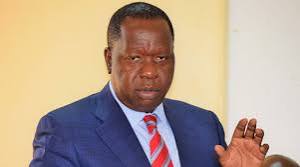
Dr Fred Matiang’i…Photo/IP.
By Peter Mwibanda
Published: August 24, 2025
NAIROBI, Kenya — In the battle for Kenya’s presidency money has always talked.
As the 2027 general election approaches, a louder voice is emerging: the restless, organized and digitally mobilized youth of Gen Z.
For decades, the road to State House has been paved with cash.
Campaign budgets now stretch into the billions of shillings with insiders estimating that a serious bid requires between KSh 10 billion and KSh 15 billion.
That money goes to logistics, delegates, rallies, media saturation and voter handouts — the backbone of traditional politics.
This time, the formula may not hold. Kenya’s youngest voters, raised in an era of hashtags and livestreams have discovered their political power — and they are refusing to be ignored.
The Billionaire Barrier
Running for president in Kenya has never been cheap. By 2027, it may be prohibitively expensive for anyone outside the billionaire class or the political deep state.
Among the few with the resources to compete:
Fred Matiang’i, the former Interior Cabinet Secretary, who is already working with international PR firms to rebuild his public image.
Gideon Moi, heir to the Moi dynasty, whose networks and resources remain formidable despite KANU’s decline.
Kalonzo Musyoka, the perennial contender, counting on Ukambani support and courting Mt. Kenya financiers.
President William Ruto who commands the advantages of incumbency but faces eroding trust among young voters disillusioned with his “hustler” promise.
These names dominate Kenya’s old political script: power secured through wealth, networks and the ability to outspend opponents.
The Disruptors
Yet a second group is gaining traction — politicians without deep pockets but with growing credibility among ordinary Kenyans.
Their campaigns thrive less on hired buses and more on viral posts.
David Maraga, the retired Chief Justice has become a symbol of integrity for voters tired of scandals.
Okiya Omtatah, the activist-turned-senator, is known for challenging corruption in court — and for winning.
Edwin Sifuna, Nairobi’s senator, blends sharp rhetoric with digital fluency, making him a favorite among young urban voters.
Babu Owino, once dismissed as a noisy backbencher has repositioned himself as an unapologetic voice of the youth, mastering platforms like TikTok and YouTube.
These disruptors lack billion-shilling war chests, but they offer something money cannot buy: authenticity and grassroots energy.
Gen Z’s Political Awakening
The protests of 2024 and 2025 marked a turning point.
Sparked by tax hikes and economic frustration, young Kenyans poured into the streets only to be met with deadly force.
More than 60 protesters were killed in June and July 2025 alone.
Instead of retreating, Gen Z doubled down. They organized online with VPNs, encrypted radio apps and Twitter/X spaces often staying a step ahead of state security.
They livestreamed clashes, documented abuses and called out leaders in real time.
For this generation, politics is not about patronage or tribe — it is about accountability.
They do not just vote; they mobilize, boycott, and expose.
They are not alone. Millennials, disillusioned after years of broken promises are rallying behind them.
Generation X particularly voters in their 40s and 50s, are quietly offering support to reformist figures like Maraga, Omtatah, and Sifuna.
Ruto’s Dilemma
President Ruto enters 2027 with unmatched campaign machinery.
He has state power, global diplomatic connections and financial resources but he also carries heavy baggage.
The “hustler” narrative that propelled him to State House has been eroded by policies viewed as punishing the poor.
Rising taxes, ballooning debt and a jet-setting lifestyle have painted a picture of detachment from the struggles of ordinary citizens.
For Gen Z, who document and share every contradiction, Ruto’s record is a constant open tab as they often say online: they’ve kept the receipts.
Cash vs. Consciousness
Kenya’s elections have long been won by the highest spender.
2027 could test whether money still beats movements.
If billionaire-backed candidates consolidate, the odds tilt heavily in their favor.
If the field fragments, and one grassroots contender harnesses youth discontent, Kenya could witness a historic upset.
That path would not be smooth. Analysts warn of deep state interference, smear campaigns and even violence.
The momentum is undeniable: Kenya’s youth are no longer passive bystanders.
A Defining Question
The 2027 race is shaping up as more than a contest between politicians. It is a choice between two futures:
Another cycle of billionaire dominance, tribal alignments and state capture
Or a generational revolt where politics is redefined by digital activism, civic courage and the refusal to be bought.
Who wins will depend on whether money can still drown out the voice of a restless generation.
This time, for the first time, the answer may not be obvious.



