


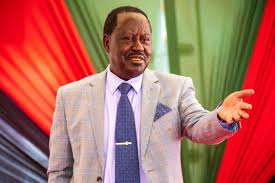
ODM leader Raila Odinga…Photo/IP.
NAIROBI, Kenya (IP) — Former Prime Minister Raila Odinga may have missed a continental role at the African Union but the suggestion that his political career is finished is both premature and strategically reckless especially for a fractured opposition struggling to define itself.
Former Deputy President Rigathi Gachagua in a recent public jab dismissed Odinga as “irrelevant” and claimed he no longer holds sway over national politics.
But history and the country’s political reality tells a different story.
Odinga’s Silence Is Strategy, Not Surrender
Raila has not been visibly active in domestic politics in recent months, fueling speculation about his succession.
But to mistake that silence for retreat is to underestimate a man who has reinvented himself in every political era since the 1990s.
From fiery street protests to statesmanship, from opposition leader to government ally and back again, Raila has mastered the art of political timing.
His support base particularly in Nyanza, Nairobi and parts of Western and Coast regions remains intact.
Even in perceived opposition strongholds, aspirants still calculate their political futures based on whether or not they have Odinga’s blessing.
A Legacy of Mobilization Power
Odinga’s real power lies not just in titles but in his unmatched ability to mobilize mass support, shape national discourse and drive civic engagement.
In the last five general elections, his coalition has consistently commanded millions of votes, reshaping electoral outcomes even when falling short of victory.
Can the opposition afford to write off a figure whose presence or absence still dictates how millions of Kenyans vote?
Gachagua’s Gamble: Political Realignment or Miscalculation?
Gachagua’s dismissal of Odinga appears more like a tactical move to project strength in Mount Kenya amid deepening divisions within the ruling coalition.
But by targeting Raila, Gachagua may be galvanizing the very opposition he hopes to fracture.
As former allies of Odinga in Western Kenya and parts of the Coast consider new alignments, his silence could be creating a vacuum or quietly preparing for a re-entry, either directly or through a chosen successor.
Either way, counting Raila out is premature.
The Succession Question and a Possible “Second Wave”
Odinga’s political future may lie beyond Kenya but the ideological infrastructure he has built particularly around justice, constitutionalism and devolution cannot be erased by insults or wishful thinking.
Even if he does not run in 2027, Raila’s endorsement remains the most valuable political asset in the opposition.
Whoever wants to claim the Azimio mantle — whether Kalonzo Musyoka,Moses Wetang’ula,Musalia Mudavadi,Hassan Joho, Martha Karua, or a younger face will still need to pass through Odinga’s political corridor.
A Political Realignment Is Inevitable — But Not Without Raila
Kenya’s politics are shifting. The emergence of young parliamentarians, disgruntled civil society actors and grassroots movements suggests the opposition is due for a realignment.
But that realignment cannot begin by pretending Raila Odinga never existed. It must begin by learning from his mobilization style, ideological clarity and consistent defiance of the status quo.
To call him irrelevant now is to ignore the lessons of Kenyan politics: that Raila’s absence often sets the stage for his most powerful returns.
Raila Is Not the Past — He’s Still the Variable
The opposition’s greatest error would be to prepare for 2027 without factoring in Raila either as a kingmaker, a disruptor, or a silent architect behind the scenes.
Political transitions are never linear in Kenya and those who underestimate Odinga’s influence often regret it too late.
Gachagua’s dismissal of Raila may score headlines but in the long game of Kenyan politics, writing him off is a bet no serious political player should be making.
Ends.



