


NAIROBI, Kenya (IP) — Kenya’s Credit Reference Bureau (CRB) system, once hailed as a cornerstone of financial discipline and transparency, is now at the center of a growing storm over its exclusionary impact on millions of low-income borrowers.
Established to foster responsible lending and borrowing practices, the CRB framework was envisioned as a mechanism to liberalize access to credit.
Instead, it has become a financial noose for over four million Kenyans who find themselves blacklisted—many for defaulting on relatively small amounts.
Among the most affected are informal sector workers and freelancers, whose livelihoods are not anchored in verifiable payslips or traditional employment structures.
Despite robust mobile money transactions and business activity, they are routinely denied access to loans, pointing to a system out of touch with Kenya’s economic reality.
“One default should not blacklist someone for life,” lamented a Nairobi-based borrower who requested anonymity. “A few negative listings should not follow you to the grave.”
Critics argue that the CRB system has become less about managing financial risk and more about protecting elite financial interests.
Commercial banks and major lenders wield overwhelming control over who gets listed or delisted, leading to concerns about systemic bias and collusion.
“CRBs have essentially become tools of gatekeeping,” said a financial justice advocate. “They’re used to preserve access for the well-connected, while locking out millions who don’t fit the traditional banking mold.”
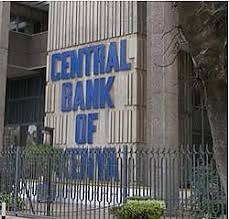
The Central Bank of Kenya (CBK) has attempted to reel in the damage. In late 2022, the regulator issued directives instructing lenders to avoid using CRB listings as the sole basis for credit decisions.
New laws also penalize financial institutions that automatically reject applicants with negative listings, especially for loans up to KSh 2 million.
President William Ruto’s administration has since doubled down on reform. In a move designed to shift the narrative from punishment to inclusion, the government began transitioning toward a credit scoring model that considers a broader range of borrower behavior.
The goal, officials say, is to rehabilitate rather than permanently ostracize defaulters.
Additional protections were introduced to regulate aggressive digital lenders. Under new legal frameworks, small-value loans are shielded from automatic listing, interest rates are capped, and transparency in lending terms is mandatory. Digital lenders are also now under direct regulatory oversight.
Still, legal experts argue the changes are cosmetic without structural overhaul. The current CRB regime, they say, remains grounded in unreasonable legal principles that ignore the realities of the informal economy and enforce disproportional punishment for minor defaults.
“To genuinely promote financial inclusion, we must rethink the binary blacklist approach,” said a legal researcher in Nairobi. “Alternative data sources like mobile transactions must be factored into credit assessments.
Transparency in listing and delisting is no longer optional—it’s a legal and ethical necessity.”
Proposals for deeper reform include mandating a graduated credit scoring system, enforcing due process in all CRB actions, and holding lenders accountable for predatory or opaque practices. Consumer protection, critics say, must be central to future legislation.
For now, the CRB framework remains a double-edged sword—one that was designed to instill fiscal discipline but has instead become a wall separating Kenya’s financial elite from the majority struggling to access basic credit.
“It’s time to unshackle millions of Kenyans from a system that punishes them for being poor,” the legal researcher said. “Credit access should reflect reality—not just privilege.”
IP Reporter.



