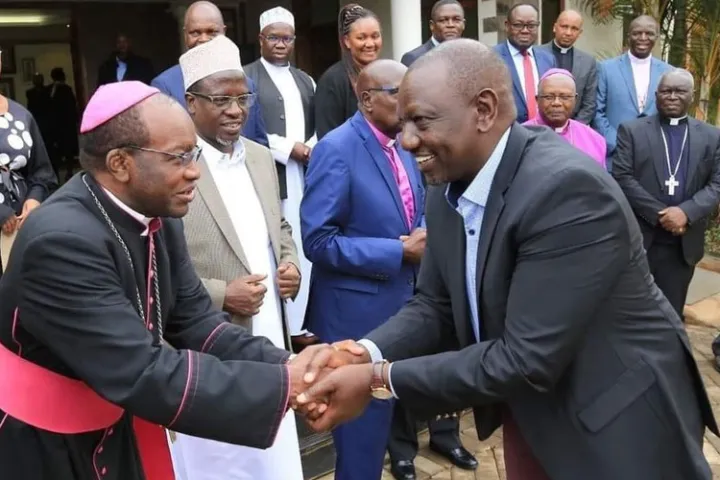
President Ruto meeting “faith led” groups.
By Peter Mwibanda.
IP Reporter | August 2, 2025
NAIROBI, Kenya (IP) — Kenya is at a moral crossroads as the call to regulate churches grows louder in the wake of recent scandals involving rogue religious leaders.
The debate is not about curtailing freedom of worship—it is about protecting citizens from spiritual abuse, economic exploitation, and psychological manipulation.
Christianity remains deeply rooted in Kenyan life. Churches serve as beacons of hope, education, and social support.
Amid the good lies a growing rot—churches that have become profit machines, political battlegrounds, or fronts for criminal activity.
The tragic events in Shakahola, where followers were starved to death under the guise of faith, were not anomalies. They exposed the consequences of unchecked spiritual authority.
They revealed the urgent need for regulation that balances constitutional rights with the imperative to uphold human dignity and the rule of law.
Kenya’s Constitution, under Article 32, protects freedom of religion. But that freedom is not a license to defraud, harm, or enslave. Regulation is not persecution—it is protection.
Genuine religious leaders should welcome oversight. Transparent financial records, mandatory registration, theological training, and adherence to human rights standards should be the norm, not the exception.
It is time to treat religion with the same seriousness we afford to education, health, and business.
The same way schools are licensed, hospitals inspected, and companies audited—so too must churches be held to ethical and legal standards.
What Kenya needs is a regulatory framework that is consultative, progressive, and constitutionally sound.
Parliament must craft laws that reflect the voice of the people and the values of the nation. This is not a call for suppression, but for responsibility.
Likewise, churches must clean their ranks. They must reject impostors, cultic practices, and toxic doctrines. Faith must not become a business without borders, nor a mask for political influence.
Regulating churches is not an attack on faith. It is an act of national healing and moral clarity. The time for action is now—before more lives are lost and more trust is broken.
Ends.