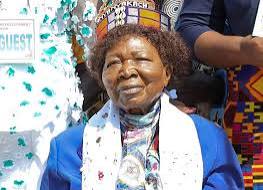
The late Phoebe Asiyo.
By Peter Mwibanda.
NAIROBI, Kenya — In an age of political cynicism, where personal gain often eclipses public service, the legacy of the late Hon. Phoebe Asiyo casts a long and sobering shadow — a reminder of what true, principled leadership once looked like.
Asiyo, the former Karachuonyo MP and the first woman officer in the Kenya Prisons Service, broke barriers with a blend of grit, grace, and unflinching moral clarity. She did not merely navigate the male-dominated world of Kenyan politics — she transformed it.
In today’s increasingly transactional political landscape, her legacy feels both distant and deeply urgent.
She entered Parliament at a time when female representation was almost nonexistent, and did so not by conforming, but by confronting.
Asiyo championed women’s rights, challenged institutional injustices, and stood firmly against patriarchal norms — often at great personal cost.
“She represented politics with a purpose,” said Mary Okelo, a long-time women’s rights advocate. “She didn’t just ask for a seat at the table. She demanded the table be rebuilt to include those left out.”
Her service extended far beyond legislation. Asiyo worked at the grassroots, helping rural women gain access to health care, legal education, and economic empowerment.
Her leadership was grounded in empathy, not ego — a far cry from the self-serving politics that dominate headlines today.
“She didn’t enrich herself. She uplifted others,” Okelo added.
Phoebe Asiyo’s political life was marked by integrity, purpose, and service. She spoke truth to power during Kenya’s most repressive years, including under the one-party state, and never wavered in her demand for justice — not just for women, but for all Kenyans.
Her moral compass, grounded in faith and feminism, still resonates. “I did not join politics to be famous or rich,” she once said. “I joined because I was tired of watching women suffer while men played politics with their pain.”
That kind of clarity is rare — and desperately needed.
As the country braces for yet another election cycle, voters are left wondering: where are the Mama Asiyos of today? Who among our leaders is willing to sacrifice comfort for conviction, optics for outcomes?
With growing disillusionment in Parliament and mounting corruption scandals, Mama Asiyo’s life stands as a blueprint for ethical governance — and a call to arms for a new generation of leaders to rise, not just to power, but to purpose.
Her passing may have marked the end of an era, but her example is timeless. Kenya doesn’t just need politicians. It needs visionaries.
It needs leaders who, like Mama Asiyo, believe that politics is not about survival — but service.
Peter Mwibanda is a legal analyst and political writer focused on youth empowerment, justice, and good governance in Kenya.
Ends.