By I.P. Reporter.
Premature birth, defined as delivery before 37 weeks of gestation, affects an estimated 15 million newborns annually, according to the United Nations.
For parents, it’s often a harrowing journey of hope and heartbreak.
For healthcare workers, it’s a race to save fragile lives.
For policymakers, it’s a stark reminder of the urgent need for global action to address the causes and improve outcomes of preterm births.
The Emotional Toll on Families.
The arrival of a baby is usually a time of celebration, but for parents of premature infants, joy can be eclipsed by fear.
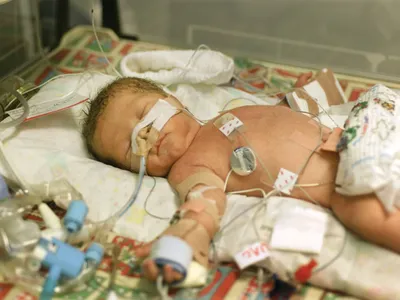
Many premature babies face critical health challenges, including respiratory distress, infections, and complications from underdeveloped organs.
Parents often endure weeks or months in neonatal intensive care units (NICUs), watching helplessly as their children fight for survival.
The psychological toll is immense. Studies in the U.S. and Europe have shown that parents of preemies are at heightened risk for anxiety, depression, and post-traumatic stress disorder.
“Every beep of the monitor felt like a question mark on my baby’s life,” one mother shared in a UN report.
Healthcare Providers on the Front Lines.
Doctors and nurses play a pivotal role, delivering specialized care in NICUs equipped with incubators, ventilators, and advanced monitoring systems.
However, such facilities are a luxury in many low-resource settings.
In countries like Malawi, where preterm birth rates are among the highest globally, simple but effective interventions such as Kangaroo Mother Care (KMC) are vital.
Recommended by the World Health Organization, KMC involves prolonged skin-to-skin contact between caregiver and baby, promoting warmth, breastfeeding, and bonding. Research has shown KMC improves survival rates by up to 50% in low-income countries.
Stark Global Disparities.
The burden of preterm births is unevenly distributed.
Sub-Saharan Africa and South Asia account for more than 60% of all premature births globally, according to the WHO.
In these regions, a lack of maternal health resources and inadequate prenatal care contribute to nearly 1 million preventable deaths of preterm infants annually.
By contrast, high-income countries like Sweden and Japan report far better outcomes due to advanced NICU care and accessible prenatal services.
In the United States, approximately 10% of births are premature, with significant racial and economic disparities.
Black women, for example, are 50% more likely to deliver preterm than white women, largely due to systemic inequities in healthcare access.
A Global Call to Action.
Addressing the crisis of preterm birth requires a coordinated, multi-faceted approach:
1. Expanding Prenatal Care: Early detection and management of high-risk pregnancies are essential.
A recent initiative in India reduced preterm birth rates by 15% through community-based prenatal programs.
2. Promoting Proven Interventions: Scaling up KMC and other cost-effective strategies is crucial, particularly in low-resource regions.
3. Investing in NICU Infrastructure: Governments must prioritize funding for NICU facilities to ensure all premature infants have access to life-saving care.
4. Supporting Families: Emotional, psychological, and financial support for parents is vital.
Programs in Canada, for instance, provide subsidized mental health services to families with preemies.
5. Raising Awareness: Advocacy campaigns, such as World Prematurity Day, help mobilize resources and draw attention to this global health challenge.
Stories of Resilience.
Despite the challenges, advances in medical science and grassroots interventions offer hope.
In Colombia, nationwide adoption of KMC has significantly reduced neonatal mortality rates.
In the U.S., innovations like artificial womb technology are pushing the boundaries of care for extremely premature infants.
“Every child deserves an equal start to life,” the UN emphasizes.
Achieving this vision demands unwavering commitment from governments, health organizations, and communities.
Addressing preterm birth not only saves lives but also strengthens families and builds a healthier, more equitable future.
Ends.