


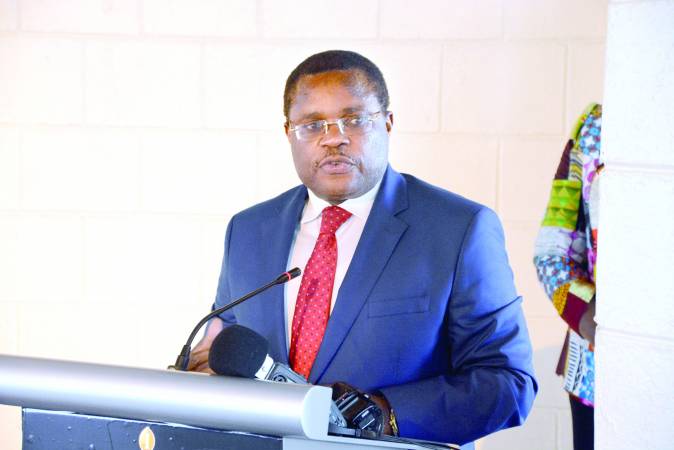
Bungoma Governor Ken Lusaka
By Peter Mwibanda | Political and Legal Analyst | The Intellectuals Post
BUNGOMA, Kenya (IP)
A volatile and deeply symbolic governorship race is unfolding in Bungoma County, where voters appear poised to disrupt long-standing political patterns in a contest that pits establishment figures against an insurgent grassroots movement.
At the heart of the race are four contrasting figures: Kimilili MP Didmus Barasa, a combative and seasoned politician; philanthropist Jimmy Nduruchi, whose rise has been fueled by grassroots appeal; Westlands MP Tim Wanyonyi, whose political pedigree links him to National Assembly Speaker Moses Wetang’ula;and former Governor Wycliffe Wangamati, seeking a comeback amid lingering controversy.
A COUNTY DISILLUSIONED:48billion in 4 years and no tangible project save for Ruto projects
Interviews with residents across the county reveal a recurring theme: What is the evidence of sh 48 billion allocated for 4 years to the Lusaka regime?
Residents have deep frustration over stalled development, perceived mismanagement of public funds and a sense that political elites have failed to translate power into tangible change.
“People feel left behind.No county legacy projects but two term campaign for Ruto rallies are the current swag for Lusaka,” said a local trader in Kimilili. “We’ve seen leaders come and go, but the impact is not what was promised.Poverty reigns in our homes”
This disenchantment has set the stage for a potential political upset for status quo.
Since the advent of devolution in 2013, Bungoma has yet to elect a governor for two consecutive terms — a pattern that reflects a restless electorate and deep dissatisfaction with leadership outcomes.
THE ESTABLISHMENT VS. THE OUTSIDER
Barasa Didmus enters the race with a solid political base and name recognition, but also carries the baggage of combative politics that may polarize voters seeking a more unifying figure.
Wanyonyi, despite his track record in Nairobi, faces a different challenge — convincing Bungoma voters that urban governance success can translate into rural transformation.
His association with his brother Wetang’ula, a dominant figure in Western Kenya politics has fueled perceptions of entrenched political dynasties at a time when voters are increasingly skeptical of “chiefdom-style” leadership.
“People here want someone who understands Bungoma, not Nairobi,” said a youth leader in Kanduyi.
NDURUCHI’S GRASSROOTS SURGE
It is in this environment that Nduruchi has emerged as a surprising but formidable contender.
Positioning himself as a non-traditional candidate, he has built a campaign around direct community engagement, philanthropy, and a promise to bypass bureaucratic inertia through international partnerships and networks.
His supporters argue that his hands-on involvement in addressing local needs — from education support to community welfare — offers a preview of a leadership style grounded in service delivery rather than political maneuvering.
Analysts say his appeal taps into a broader national trend: voter fatigue with career politicians and a growing appetite for outsider candidates perceived as more accountable and action-oriented.
WANGAMATI’S REDEMPTION BID
Wangamati’s re-entry into the race adds another layer of complexity.
While some of his development projects remain visible and appreciated, allegations of corruption and governance challenges during his tenure continue to cast a long shadow.
Critics question whether he can regain public trust, especially amid scrutiny over financial management and unresolved legal concerns.
“Leadership is about trust,” said a civil society activist in Bungoma town. “That trust, once broken, is hard to rebuild.”
THE CDF QUESTION AND TRUST DEFICIT
Concerns about fiscal discipline have also surfaced in relation to Barasa, with sections of the electorate questioning whether his stewardship of constituency development resources reflects the prudence required to manage a county budget worth billions of shillings.
This scrutiny underscores a central issue in the race: credibility.
Voters are no longer just evaluating campaign promises — they are interrogating track records, integrity, and the capacity to deliver measurable outcomes.
A BREAK FROM THE PAST?
Bungoma’s political history suggests a pattern of rejection rather than continuity.
No governor has secured a second term, and early signals indicate that 2027 may follow the same trajectory.
The electorate appears increasingly inclined to prioritize lived experience over political rhetoric — a shift that could favor candidates like Nduruchi, whose campaign is rooted in direct community impact.
Yet the race remains fluid.
Barasa’s political machinery, Wanyonyi’s institutional backing, and Wangamati’s residual support base ensure that no candidate can be discounted.
THE DECISION POINT
As campaigns intensify, Bungoma voters face a consequential choice: maintain ties to established political structures or pivot toward a new, untested leadership model.
The outcome will not only determine the county’s next governor but also signal whether a broader political realignment is underway — one that challenges dynasties, redefines accountability and reshapes the meaning of leadership at the county level.
For now, one reality is clear: Bungoma is no longer voting out of habit. It is voting out of experience and expectation.



