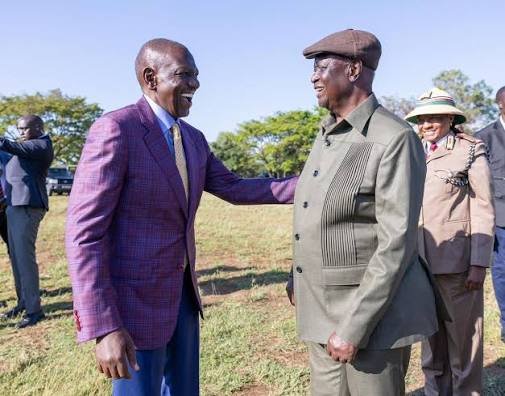
President Dr William Ruto with his broadbased government partner Dr Oburu Odinga,the ODM party leader.
ECONOMY (INVESTIGATIVE FEATURE)
IP team
NAIROBI, Kenya
Somewhere in a government report, Kenya’s economy is doing fantastic.
Out here, in actual Kenya, it’s doing character development.
At a busy market in Nakuru, traders aren’t talking about expansion plans or profit margins—they’re discussing survival strategies like generals in a losing war.
Customers now buy in “kidogo kidogo” installments and even that feels ambitious.
Official figures insist the economy is growing—powered by infrastructure, fintech and the occasional PowerPoint presentation.
But the average household is still waiting for this growth to trickle down or at least send a postcard.
Instead, what has arrived—reliably and without delay—are taxes.
VAT stretches further, income tax digs deeper, and somehow, the bill always finds you before the benefits do.
Economists call this an “asymmetric recovery.” Regular Kenyans might call it something less printable.
Meanwhile, institutions like the International Monetary Fund applaud fiscal discipline, which is a polite way of saying: “tighten your belt.”
The problem? Many belts are already on their last hole.
The risk isn’t theoretical. When an economy grows but people don’t feel it, frustration becomes policy’s loudest critic.
For policymakers, the dilemma is simple to explain and difficult to solve: how do you balance the books without emptying the people?