


By Peter Mwibanda
Political and Legal Analyst writing for Intellectuals Post
The intensifying military confrontation between the United States, Israel and Iran is no longer confined to the battlefields of the Middle East.
What began as targeted strikes against Iranian military infrastructure is rapidly evolving into a geopolitical confrontation whose consequences are reverberating across continents — including Africa.
For many African governments, the unfolding crisis presents a delicate and uncomfortable dilemma: how to navigate alliances with Western powers while avoiding the economic and political fallout of a widening global conflict.
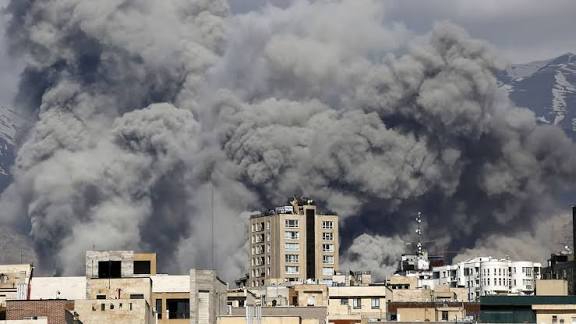
As bombs fall across Iranian territory and retaliatory threats multiply, African economies — already grappling with inflation, debt and political pressures — are bracing for severe shocks.
Kenya, under President William Ruto, may soon find itself caught in the crosscurrents of a war it has no control over but cannot escape.
The Strategic War Against Iran
The ongoing military campaign by the United States and Israel against Iran marks one of the most consequential escalations in Middle Eastern geopolitics in recent decades.
The strikes have targeted strategic installations, military facilities and infrastructure believed to support Iran’s regional influence.
Washington and Tel Aviv argue that the operations are necessary to neutralize security threats and curb Iran’s military ambitions.
Tehran, however, views the attacks as a direct assault on its sovereignty and has vowed retaliation across multiple fronts.
The danger is not simply the violence itself, but the expanding network of actors now being pulled into the confrontation.
Middle Eastern militias allied with Iran have already issued warnings of reprisals against American and Israeli interests worldwide.
Global shipping lanes are under heightened threat. Energy markets have reacted with volatility.
Yet beyond the Middle East, another geopolitical layer is quietly emerging — the alignment of certain African governments with Western strategic positions.
Africa’s Quiet Alignment
Several African nations maintain strong military, intelligence and diplomatic partnerships with the United States and its allies.
These relationships have often been framed around counterterrorism cooperation, security assistance and economic partnerships.
However, in moments of global conflict, such alliances inevitably carry geopolitical implications.
African governments that openly or implicitly support Western military actions risk being drawn into broader strategic alignments that may not serve their immediate national interests.
For countries reliant on Western financial institutions, security cooperation and diplomatic support, remaining neutral in major geopolitical conflicts becomes increasingly difficult.
This reality is particularly relevant for governments seeking continued investment, security cooperation and development assistance from Western powers.
The risk, however, is that Africa becomes an indirect participant in conflicts driven largely by geopolitical interests outside the continent.
The Economic Shock Africa Cannot Avoid
Perhaps the most immediate impact of the Middle East crisis lies in the global energy market.
Iran sits at the center of one of the world’s most strategically critical oil corridors.
Any disruption to shipping routes in the Gulf region threatens to drive global oil prices sharply upward.
For African economies heavily dependent on imported fuel, the consequences are severe.
Fuel costs rise almost immediately.
Transportation prices increase.
Food inflation intensifies.
National currencies come under pressure.
Kenya is particularly vulnerable to such shocks. Already navigating high public debt and cost-of-living concerns, the country could face renewed economic strain if energy prices surge in the coming months.
President William Ruto’s economic program — built on fiscal reforms, taxation and structural adjustments — may struggle to withstand another global energy crisis.
As the 2027 election cycle approaches, economic pressure triggered by external geopolitical events could significantly reshape Kenya’s domestic political landscape.
The Political Risk for African Leaders
Global conflicts often produce unexpected political consequences in developing democracies.
Economic hardship fueled by rising fuel and food prices quickly translates into public frustration.
Governments are frequently blamed for economic conditions that originate far beyond their borders.
In Kenya, where political competition is already intensifying ahead of the next general election, economic instability could amplify opposition narratives against the government.
Across Africa, leaders must therefore manage a delicate balancing act: maintaining strategic international partnerships while protecting domestic economic stability.
Open alignment with global military campaigns may offer diplomatic benefits, but it also exposes governments to political backlash at home.
A Changing Global Order
The escalating confrontation with Iran also signals a broader shift in global power dynamics.
Major powers such as Russia and China are closely watching developments, positioning themselves diplomatically while criticizing Western military escalation.
The crisis may therefore deepen existing geopolitical rivalries, accelerating the fragmentation of the international order.
For Africa, this evolving landscape presents both risks and opportunities.
The continent increasingly finds itself courted by competing global powers seeking strategic influence.
Yet deeper involvement in global rivalries could undermine Africa’s long-term stability and development priorities.
A Conflict With Global Consequences
Wars in the Middle East have historically reshaped global politics, energy markets and international alliances.
The current confrontation appears poised to follow the same pattern.
From Tehran to Tel Aviv, from Washington to Nairobi, the ripple effects are already becoming visible.
The missiles may be flying over the Persian Gulf.
But the economic aftershocks will travel far beyond the battlefield — reaching African capitals, markets and political systems.
For African leaders and citizens alike, the unfolding crisis serves as a stark reminder of an uncomfortable reality in an interconnected world: when global powers go to war, no region remains untouched.



