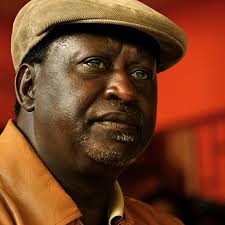
The late ODM leader Raila Amollo Odinga
NAIROBI
Exactly one month after the passing of veteran Kenyan opposition leader Raila Odinga, his larger-than-life presence remains at the epicentre of political maneuvering in Kenya.
Even in death, Odinga’s name, legacy and political brand are commanding attention across the spectrum — and as the 2027 general elections approach, his absence may prove as influential as his presence.
The Legacy Beyond October
Odinga died on Oct. 15, 2025, in Kerala, India, at age 80.
He had been undergoing treatment when he suffered a cardiac arrest.
The national response was profound: a state funeral, seven days of mourning and national-symbol moments of reflection.
What is striking now is how his death has catalysed a sprint of political claims, counter-claims and legacy positioning among members of his party and beyond. The brand “Raila” is not fading — if anything it is being repurposed.
Jostling for the “Raila Brand” Legacy
Within his long-time party — the Orange Democratic Movement (ODM) — and among allied camps, senior figures are already staking claim to the mantle of “carrying Raila’s vision”.
They aim to interpret his final maneuvers and rhetoric in ways favourable to their own 2027 ambitions.
Some claim that Odinga’s last public interventions signalled a generational hand-over to younger leaders and are citing his remarks to bolster their elevation.
Others argue that the “Raila project” is not about him personally but about a broader ideology of reform, social justice and opposition—which they say they now carry forward.
Meanwhile, rival formations and even former allies are invoking Odinga’s life story — his history as a democracy crusader, his resistance to electoral injustice — to portray themselves as inheritors of a broader narrative, not just his party alone.
This claim-and-counter-claim environment underscores how potent Odinga’s name still is.
For many voters, especially in his strongholds in western Kenya, “Raila” remains synonymous with hope, mobilization and challenge to the status quo.
That gives his adherents a currency they are keen to spend.
Political Implications Ahead of 2027
With the 2027 elections on the horizon, the lingering “Raila factor” has several consequences:
Electoral mobilization: His loyal base is leaning forward rather than drifting.
The branding of his legacy ensures that the power to mobilise crowds, set agendas and define opposition identity remains active.
Succession tensions: Within ODM (and the broader opposition coalition the Azimio la Umoja One Kenya Coalition), there is a scramble between established lieutenants and younger cadres to become the “true” holder of Odinga’s torch.
Whoever wins that internal contest may dominate the ticket in 2027.
Cross-party ramifications: Even among ruling party actors and those who had shifted allegiances, Odinga’s tombstone is a political asset.
Some are already aligning with his narratives or invoking his name to curry favour in regions where his influence remains vast.
Symbolic pivot: The fact that Odinga never captured the presidency — despite five bids — adds to the narrative potency.
His death freezes him in a symbolic role as the eternal challenger, martyr-leader or legacy figure.
That opens opportunities for his movement but also poses risks of stagnation if new leadership fails to evolve.
Risks and Unanswered Questions
While the brand remains strong, the post-Odinga era carries risks:
Will ODM and the broader opposition translate the sentiment into a coherent new leadership model, or will internal squabbles undermine it?
Can the “Raila brand” adapt to newer generations of voters who did not know him in his activism prime?
Does over-dependence on his personality inhibit the building of sustainable institutions and policy platforms?
How will the ruling coalition respond to this renewed opposition energy that centres on Odinga’s legacy?
Conclusion
In Kenya’s dynamic political landscape, the death of Raila Odinga has not dimmed his influence — it has reframed it.
His brand lives on as a rallying point, a contested prize and a political lever in anticipation of 2027.
For his party, his supporters and his opponents alike, the question now is not just who will succeed Odinga, but how they will carry forward a legacy grounded in resistance, reform and mass mobilisation.
For Kenya’s democracy, the moment carries promise — but also challenge.
The lasting value of Odinga’s legacy will depend not merely on name invocation, but on the ability of a new generation to translate that memory into tangible governance, effective leadership and inclusive politics.