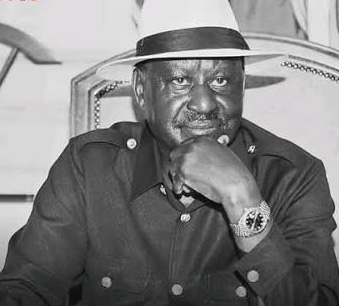
The late Raila Odinga
By Peter Marango Mwibanda
NAIROBI
Few political figures in Kenya’s history have tested the limits of law and democracy as profoundly as Raila Amolo Odinga.
To some, he is the perennial challenger — a man whose political career is defined by courtroom battles and contested elections.
Yet to many legal minds, Raila’s story is not one of defeat, but of remarkable faith in the judiciary, even when the verdicts cut deep.
Raila Odinga’s political journey is a case study in the interplay between law, democracy, and resilience.
Despite painful legal defeats, he never turned his back on the courts.
Instead, he consistently elevated the rule of law as the cornerstone of political legitimacy — a rare stance in a continent where losing politicians often resort to the streets rather than the Constitution.
The Legal Warrior
From the disputed 2007 election that plunged Kenya into crisis, to the groundbreaking 2017 Supreme Court nullification of the presidential results, Raila has shaped the legal and constitutional evolution of Kenya more than any other politician.
Each petition he filed — win or lose — strengthened the architecture of Kenya’s electoral jurisprudence.
His petitions forced the judiciary to confront fundamental questions: What defines a free and fair election?
What is the threshold of accountability in public office? Most importantly, can law stand above politics in a nation where power often bends institutions?
In this sense, Raila Odinga has not merely been a litigant — he has been an architect of Kenya’s democratic jurisprudence.
Faith in an Imperfect System
It would have been easy for Raila to abandon the courts.
The 2013 Supreme Court verdict that upheld Uhuru Kenyatta’s victory left his supporters disillusioned.
The 2022 judgment, which confirmed William Ruto’s win, deepened the feeling of betrayal among his loyalists.
Yet Raila never called for the destruction of the judiciary; he called for its reform.
His message has always been consistent: that the rule of law, however flawed, is the only path toward justice.
In a country where faith in institutions often wavers, Raila’s legal approach represents maturity — the belief that the court, not the crowd, must arbitrate political disputes.
The Constitutionalist at Heart
Behind the fiery rallies and political slogans lies a man deeply rooted in constitutionalism.
Raila’s advocacy for a new constitution culminated in the 2010 promulgation of the supreme law — a legal document that remains his most enduring victory.
The Constitution of Kenya 2010 embodies the very ideals he has fought for: devolution, checks and balances, judicial independence, and human rights.
Even his critics admit that Raila’s persistence has compelled Kenya’s legal system to evolve.
The judiciary today operates under greater public scrutiny and accountability largely because Raila made it impossible to separate law from politics in matters of governance.
A Legacy Beyond Judgments
History may remember him as the man who never became president, but the law will remember him as the man who deepened constitutional democracy.
Raila’s greatest legacy is not in State House, but in the Supreme Court, in the countless rulings that bear his name and in the civic awakening his petitions have inspired.
He taught Kenyans that justice is a journey, not a destination. He showed that defeat in court does not equate to defeat in principle.
Conclusion
In the theatre of Kenyan politics, Raila Odinga has stood not only as an opposition leader but as a constitutional crusader.
His unwavering belief in legal processes, even when they fail him, reflects his faith in the promise of law as an instrument of justice.
He may have lost elections, but he never lost faith in the courts — and that, in the end, may be his most enduring victory.