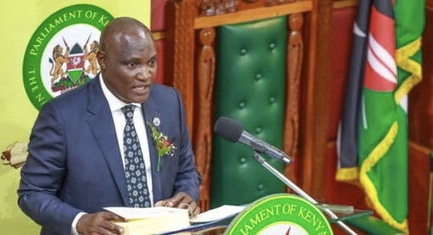
CS for Finance John Mbandi.
By Peter Mwibanda
NAIROBI, Kenya (IP) — Dictatorship in the 21st century doesn’t arrive on tanks — it slips in through budget cuts.
Across Kenya, a creeping erosion of the 2010 Constitution is unfolding not through violent coups or emergency decrees, but through deliberate defunding of essential public services.
Education, healthcare, and civil oversight — the lifeblood of Kenya’s democracy — are being systematically drained of resources, all under the banner of “fiscal consolidation.”
Analysts warn the result is not merely economic pain but a strategic weakening of the institutions that protect citizens from authoritarian rule.
“This is not austerity. It’s institutional starvation,” said political analyst David Ndii, a former government economic adviser turned critic.
“You don’t defund education, health and judiciary unless you want a docile, sick, and legally helpless population.”
Education: Starving the Mind.
Since independence, education has been a tool for social mobility and national development in Kenya. Today, it is collapsing under the weight of neglect.
Delayed disbursement of capitation funds has left public schools operating without textbooks, desks, or even basic sanitation.
Universities, once centers of research and debate, are drowning in debt. Lecturers face months of salary delays.
Meanwhile, the rollout of the Competency-Based Curriculum (CBC) has been underfunded and poorly coordinated.
“It’s not just underfunding — it’s sabotage,” said a high school principal in Kisii County who requested anonymity. “They are creating a generation of frustrated learners and demoralized teachers.”
With the Higher Education Loans Board (HELB) struggling to finance students, many young Kenyans face the end of their academic journey before it begins.
Health: A Nation in Pain
Article 43 of the Constitution guarantees every Kenyan the right to the highest attainable standard of health.
Public hospitals tell a different story: empty shelves, long queues, and worn-out staff.
The devolution of health services has been marred by chronic underfunding, with county governments unable to meet wage bills or restock essential drugs.
Strikes by doctors and nurses are now routine. Maternal mortality rates are creeping back up. In some rural counties, ambulances double as hearses.
“The government has washed its hands of public health,” said Dr. Stella Mwangi, a physician at Kenyatta National Hospital. “If you’re poor and sick, you’re on your own.”
Observers argue that a weakened healthcare system doesn’t just reflect economic struggle — it creates a submissive population, too burdened by survival to resist.
Civil Liberties: Power Without Oversight
In a democracy, watchdogs matter. But Kenya’s independent commissions are being defanged by budget starvation.
The Kenya National Commission on Human Rights (KNCHR) is struggling to retain staff.
The Independent Policing Oversight Authority (IPOA) has seen budget lines slashed even as cases of police brutality spike. The Ombudsman’s office is overwhelmed and under-resourced.
Even the Judiciary — constitutionally mandated to be independent — is increasingly dependent on the Executive for operational funding.
“The Judiciary can’t bite if you pull its teeth,” said legal scholar Yvonne Oduor. “Delays in justice are no accident — they are engineered.”
Meanwhile, media freedom is being squeezed not through censorship, but by withholding government advertising, a major revenue stream.
Protests are curtailed using excessive police force, and surveillance of civil society is on the rise.
A Budget is a Moral Document.
The 2010 Constitution was forged in the aftermath of bloodshed and built on a promise: dignity, equity, and participation. But budget allocations tell a different story.
In the current fiscal year, allocations for education, health, and the Judiciary were cut or stagnated — while the State House budget rose by more than KSh 1.5 billion.
Security agencies saw generous boosts. Luxury vehicle purchases and foreign travel remain untouched.
“This isn’t about money. It’s about power,” said economist Kwame Owino. “The state is spending not to serve — but to control.”
A Silent Coup.
Kenya is not unique. Across the world — from Hungary to Turkey to Venezuela — democratic backsliding often begins with small administrative decisions. Close the civic space. Delay court judgments. Let schools rot. Blame it on budget constraints.
By the time the constitution is suspended — the public no longer has the strength, will, or capacity to resist.
Kenya may not be under dictatorship today. But the scaffolding is being quietly assembled.
“If we wait until it looks like a dictatorship, it will be too late,” warned constitutional lawyer Waikwa Wanyoike. “We must see the signs for what they are — and act before silence becomes permanent.”
Editor’s Note: This article is part of a continuing series examining the erosion of democratic norms and constitutional values in Africa.
For multimedia features, including charts of budget changes across key sectors, and interviews with whistleblowers and legal experts, visit [your publication’s digital platform].
©2025 Peter Mwibanda. All rights reserved.