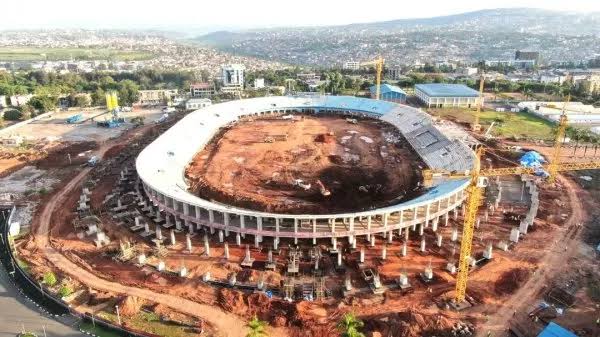
Talanta stadium,Nairobi under construction in readiness for AFCON 2027 games.
By Sports Editorial Desk.
NAIROBI, Kenya .
From the imposing Moi International Sports Centre in Nairobi to the newly announced Talanta Stadium, China’s blueprint in Africa’s sporting infrastructure is no longer just about soft power — it’s a calculated long game of influence, access, and geopolitical stakes.
What many once viewed as benevolent aid — building national stadiums across the continent — is now being scrutinized as a form of “stadium diplomacy.”
With over 100 stadiums constructed or financed in Africa, China has emerged as the continent’s biggest sports benefactor, quietly shaping Africa’s readiness for major tournaments like the Africa Cup of Nations (AFCON).
Kenya’s Case: New Stadiums, Familiar Partners.
Kenya, co-host of the 2027 AFCON under the Pamoja Bid with Uganda and Tanzania, is banking heavily on Chinese-built infrastructure.
The Moi International Sports Centre, Kasarani — a symbol of Kenya-China ties since 1987 — remains the country’s flagship stadium.
Now, the upcoming Talanta Stadium in Nairobi is set to become the next showpiece, being constructed by a Chinese contractor under a government plan to revamp the country’s sports facilities.
The facility, located at the Jamhuri Grounds, is among the key venues lined up to meet Confederation of African Football (CAF) standards.
Its construction is part of President William Ruto’s sports agenda — but once again, the bricks are Chinese.
Stadiums of Influence: East Africa’s Strategic Arenas.
Across East Africa, China’s sports diplomacy unfolds like a master plan:
In Tanzania, the Benjamin Mkapa Stadium in Dar es Salaam and Amaan Stadium in Zanzibar are Chinese-funded giants.
In Uganda, the Mandela National Stadium, built in the 1990s, was one of the earliest signs of China’s entry into the region’s sporting scene.
Ongoing projects like the Samora Machel Stadium in Arusha signal a continuation of this partnership.
These stadiums, while physically separated, are politically and diplomatically interconnected — each a concrete gesture of Beijing’s quiet, enduring influence.
🏟️ WHO BUILT WHAT?
Stadium Location,Year Completed Built/Funded By who and for what Use.
Moi International Sports Centre Nairobi, Kenya(1987)Built by Chinese Government
Talanta Stadium (underway),Nairobi, Kenya 2025–2026 (est.).Chinese contractor (Govt project)to be used as AFCON 2027 venue.
Benjamin Mkapa Stadium Dar es Salaam, Tanzania,2007 ($56M)loan from China.
Samora Machel Stadium (ongoing) Arusha, Tanzania,2025–2026 (est.)Chinese firm built for AFCON bid, regional games.
Amaan Stadium,Zanzibar, Tanzania 1970s (renovated).China-funded renovation for Football, political events.
Mao Zedong Stadium,Pemba Island, Tanzania,1970s,Chinese aid to be used for Local sports.
Mandela National Stadium,Kampala, Uganda 1997 China (complete funding) Uganda national team home ground.
More Than Concrete: A Silent Stake in Africa’s Future.
Analysts note that for China, these are not merely sports venues — they’re gateways to deeper strategic relations.
Stadiums become focal points of diplomacy, visible testaments of friendship, but also leverage points when African countries seek debt relief, trade agreements, or support for domestic infrastructure.
“It’s soft power layered with long-term intention,” said Dr. James Khamati, a Nairobi-based geopolitical researcher. “China isn’t just giving — it’s investing. And it’s investing smart.”
The stadiums also serve as platforms for Chinese construction firms, who dominate labor, materials, and design — limiting skills transfer or industrial growth in host countries.
AFCON 2027: A Tournament Made in Beijing?
As the Pamoja Bid prepares to host the continent’s most prestigious football tournament, a quiet irony looms: the main stage may have been funded, designed, and built — not by African talent — but by a global superpower with no team in the tournament.
The upcoming Talanta Stadium, intended to host AFCON matches in Nairobi, follows a pattern that’s become increasingly familiar: Africa dreaming, and China building.
SIDEBAR ANALYSIS | CG Sports Editorial.
Behind the Bleachers: What China Really Gains:
1. Influence, not just infrastructure.
Each stadium is part of broader bilateral ties — often tied to votes, trade support, or diplomatic gestures at international forums.
2. Economic control.
Chinese firms dominate construction from planning to completion, often sidelining local contractors and limiting employment gains.
3. Maintenance burdens.
Once built, many stadiums fall into disrepair due to a lack of sustainable funding, turning showcase projects into burdens.
4. Symbolism over substance.
While stadiums boost national pride, critics argue grassroots sports development and athlete welfare are left underfunded.
Final Whistle.
China’s stadium diplomacy has redefined Africa’s sports infrastructure — but it has also redrawn the continent’s geopolitical map.
In football, as in foreign policy, the assist matters as much as the goal. And right now, China is making all the key passes.
As Africa dreams of hosting and winning tournaments on home soil, it must also ask: Who is building the pitch — and at what cost?
Because in the beautiful game — and global politics — nothing is ever truly free.
Ends.