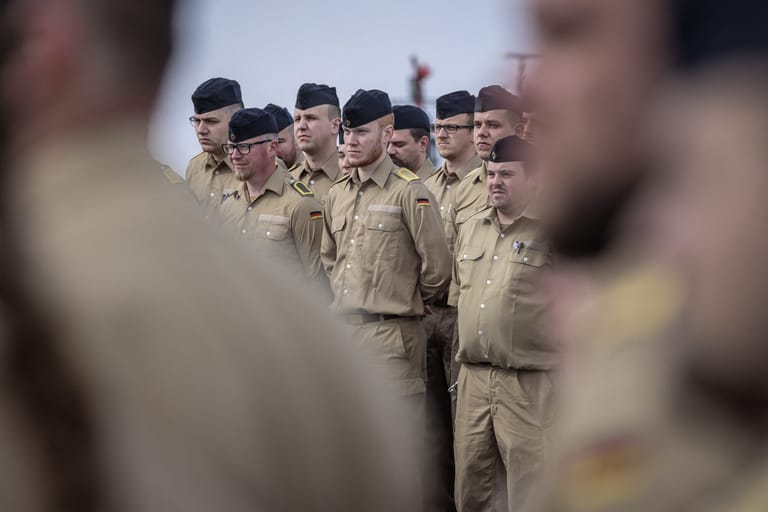
Germany…The government abolished the service draft in 2011 but thinking of reviving amidst the Russian invasion of Ukraine….Photo/Courtesy.
By Mwibanda.
Nairobi,Kenya.
The question of whether citizens are ever obligated to participate in a national service draft is one that intertwines morality, civic duty, and the principles of individual freedom.
Historically, national service drafts have been instituted in times of crisis, often to secure the manpower needed to protect a nation or to accomplish large-scale national goals.
However, the obligation of citizens to comply with such mandates is a deeply contested issue.
Historical Context of National Service Drafts.
National service drafts, often referred to as conscription, date back centuries.
From ancient empires to modern democracies, leaders have relied on the draft to amass armies or mobilize citizens for tasks deemed essential for the nation.
For instance:
1. Ancient Greece and Rome utilized conscription to expand and protect their territories.
2. The World Wars saw widespread drafts in many nations, where millions were called to serve.
3. Civil initiatives, such as public works projects during the Great Depression in the United States, involved a form of mandatory participation, albeit not always through legal obligation.
These examples demonstrate that national service drafts often emerge when a society’s survival, growth, or stability is at stake.
The Ethical Debate.
The obligation to serve in a national draft raises ethical questions. On one hand, proponents argue that:
Civic Duty: Citizens owe allegiance to their country, and serving during critical times is a small price for the freedoms and protections they enjoy.
Collective Security: A nation’s survival often depends on the willingness of its people to work together for the greater good.
Unity and Purpose: National service can foster a sense of shared purpose and solidarity among citizens.
On the other hand, critics contend that:
Individual Freedom: Forcing someone to serve violates their personal autonomy.
Ethical Concerns: Not all citizens may morally agree with the reasons for the draft, such as war or specific government policies.
Equity Issues: Historically, drafts have disproportionately affected marginalized groups, raising concerns about fairness.
Modern Implications.
In many countries today, national service drafts have been replaced or supplemented by volunteer systems.
For instance, the United States transitioned to an all-volunteer military after the Vietnam War.
However, selective service systems still exist in case of emergencies.
Other nations, like Israel and South Korea, mandate national service for all citizens due to ongoing security threats.
These systems highlight a cultural acceptance of collective responsibility that differs from more individualistic societies.
When, If Ever, Should Citizens Be Obligated?
The answer to whether citizens should ever be obligated to a national service draft depends on the context.
In times of existential threat, such as large-scale wars or natural disasters, many argue that a draft is justified to preserve the nation.
However, the implementation must be fair, transparent, and respectful of individual rights.
In peacetime, mandatory service programs, like community or environmental service, are often suggested as alternatives.
These can strengthen civic engagement without coercion, striking a balance between individual freedom and collective responsibility.
Conclusion.
The obligation to a national service draft is a complex issue that reflects a society’s values and priorities.
While there are situations where such drafts may be necessary, they must be approached with caution, ensuring they uphold the principles of justice, equity, and respect for individual freedoms.
Only then can the delicate balance between personal liberty and national duty be maintained.
Ends.