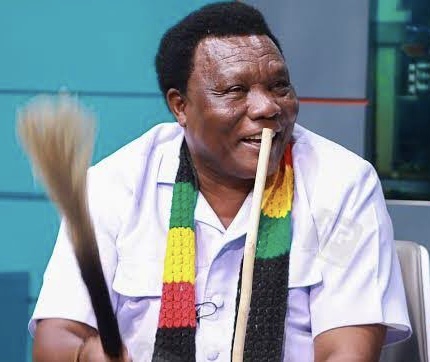
John Musila, the Member of Parliament representing Bubulo East County in Namisindwa District,Uganda……..Photo/IP
By IP REPORTER
KAMPALA, Uganda
As political temperatures surge across East Africa, a candid admission by a Ugandan lawmaker has cast a rare spotlight on a widespread but rarely acknowledged campaign strategy: the use of traditional witchcraft to win elections.
John Musila, the Member of Parliament representing Bubulo East County in Namisindwa Districtt, broke political taboos in a televised interview with a Uganda local media outlet.
Musila stated that seeking divine intervention from traditional shrines is an open secret within legislative hallways.
“It’s not only MPs who visit shrines. Politicians also go there,” Musila said, openly admitting to participating in these rituals himself. “We go there to seek leadership and political victory. Many MPs and even top politicians visit shrines.”
A Regional Arms Race for Spiritual Backing
Musila’s comments come as Uganda prepares for its upcoming general elections.
Political observers note that while Uganda is predominantly Christian, the intense anxiety of losing office drives a significant number of candidates to seek protection charms and success rituals from traditional healers.
Local medicine men report a surge in demand, offering rituals and materials designed to shield politicians from misfortune and ensure electoral success over rivals.
The phenomenon is not contained to Uganda. Across the border, Kenya’s Independent Electoral and Boundaries Commission (IEBC) has locked in August 10, 2027, as the official date for the country’s next highly anticipated general election.
Observers in Nairobi indicate that Kenya’s upcoming campaign cycle is triggering a similar “harvest season” for local medicine men.
Historically, Kenyan politics has seen the dark arts cross into formal judicial proceedings.
Landmark parliamentary petitions, such as the famous 1996 case against former Ford-Kenya boss Musikari Kombo, involved formal courtroom testimony detailing the forced administration of traditional binding oaths like khulia silulu (the eating of a bitter thing) to secure voter loyalty.
Local news outlets like The Star have previously documented high-profile, gold-plated client lists of politicians visiting prominent traditional healers in regions like Kisii and Kitui for fame, power and protection against electoral rivals.
The Institutional and Religious ClashesThe open acknowledgment of traditional practices creates severe friction within heavily religious state institutions.
Church leaders have strongly pushed back against the practice.
Retired Bishop of West Buganda, Henry Katumba Tamale, publicly condemned lawmakers who rely on sorcery, stating it is “unfortunate that leaders hold holy books while taking their oaths, but later place their confidence in witchcraft”.
Similarly, the Speaker of Parliament, Jacob Oboth-Oboth, recently addressed a church congregation at St. Mark Church of Uganda to publicly address lingering public anxiety regarding “juju” and spiritual intimidation within the parliament buildings, asserting that faith in God remains stronger than any supernatural forces critics claim haunt the legislature.
Legal Frameworks and Electoral LawWhile culturally pervasive, the practice remains highly illegal under codifying regional statutes.
Uganda’s Legal Penalties: Under Section 134 of the Ugandan Penal Code Act and the historic Witchcraft Act of 1957, practicing witchcraft or presenting oneself as a witch carries a criminal penalty of up to five years in prison. Furthermore, Section 133 outlines that threatening another person with harm or disease using supernatural means can carry sentences extending up to life imprisonment.
Kenya’s Election Regulations: In Kenya, Section 63(1) of the Elections Act explicitly forbids the use of witchcraft, force, or traditional binding oaths during the electoral cycle.
If a petitioner successfully proves that a winning candidate engaged in witchcraft to impede the free franchise of voters, the High Court maintains full authority to nullify the election results entirely.
While public platforms focus heavily on economic policy, national budgets and infrastructure development, Musila’s admission reveals that a parallel, supernatural campaign is quietly under way behind closed doors across East Africa.
For many candidates facing unpredictable electorates, a visit to a local shrine is viewed as a necessary layer of job security.
Ends.