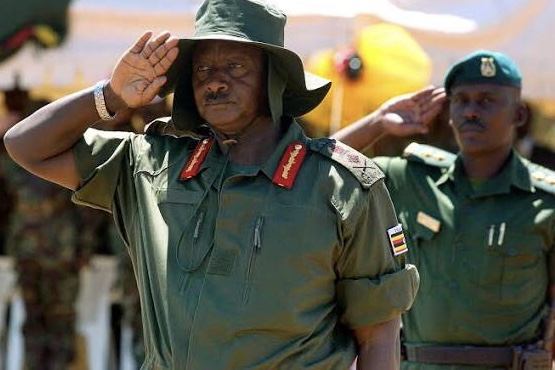
President Museveni of Uganda in a file photo
By Peter Mwibanda, Political and Legal Analyst and Commentator at Intellectuals Post
NAIROBI, Kenya
Across East Africa, elections are held, parliaments sit, and constitutions proclaim freedoms. Yet beneath this democratic façade lies a troubling reality: dissent has become criminal.
Protest, criticism, and opposition politics are increasingly framed as subversion, disorder, or terrorism, helping explain why elections so rarely change who governs.
The Illusion of Choice
Opposition parties exist, but in hostile terrain. Rallies are blocked on “security” grounds, leaders are arrested or surveilled, media coverage is skewed, and funding rules are selectively enforced.
Uganda charges opposition figures under public order and cybercrime laws. Tanzania requires police clearance for meetings that is often denied.
Rwanda tightly controls opposition activity, while Burundi’s critics operate largely from exile.
Even in Kenya, state power is often weaponized against dissent outside election cycles.
The result is a managed democracy—competitive enough to claim legitimacy, constrained enough to prevent real power transfer.
Ballots, Not Breakthroughs
Elections meant to ensure accountability have instead become political endpoints.
After voting, participation shrinks, protest is discouraged, civil society is regulated, and independent institutions align with incumbents. Accountability goes dormant until the next cycle.
Criminalising Dissent as Governance
Repression has been normalized and legalized. Protest laws, NGO rules, media statutes, and digital surveillance are justified as security measures but instead criminalize dissent.
Demonstrators are charged, journalists accused of false news, and online critics arrested.
East Africa’s democratic crisis is no longer about whether elections occur—but whether democracy survives beyond election day.
Until dissent is protected rather than punished, ballots will remain rituals, not remedies.