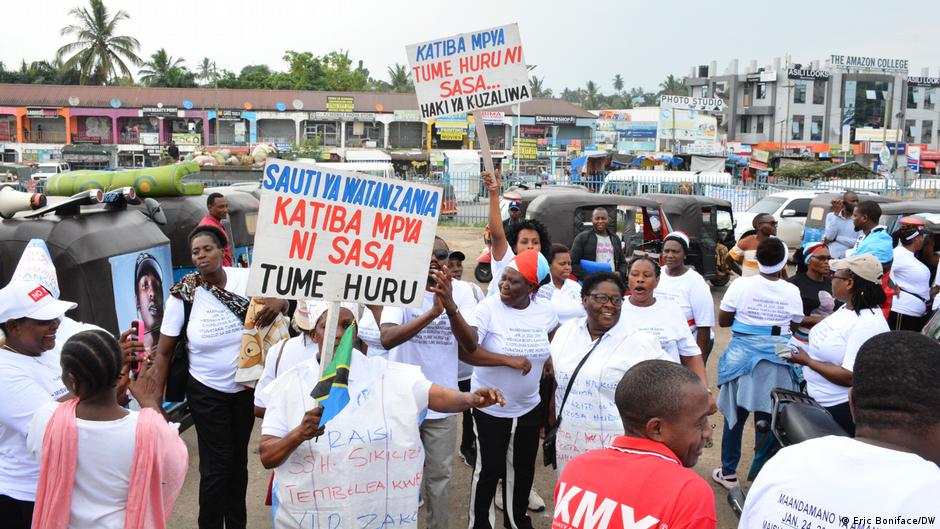
Youths in Tanzania clamoring for constitutional changes
By Peter Mwibanda
Intellectualspost (IP)
From Nairobi to Kampala and Dar es Salaam, a generation refuses to inherit fear — demanding accountability, fair elections, and the right to speak.
A Generation Under Siege
Across East Africa, young people are under siege.
In Kenya, Uganda and Tanzania, governments have institutionalized the idea that youth equal chaos.
Police routinely arrest young activists, often without charge.
Protesters face tear gas and live ammunition, while public statements from government officials frame the youth as violent and disloyal.
According to data from the East African Human Rights Observatory, over 3,000 young people were arrested across the three countries in 2024 alone for participating in demonstrations or online activism.
Many reported physical abuse, arbitrary detention and denial of legal representation.
“They say we are violent,” says 23-year-old Ugandan activist Michael Katende. “But it is the state that shoots, arrests, and intimidates us every day. We are learning that silence is inherited — and we refuse it.”
The state’s monopoly on violence is both literal and symbolic.
It enforces fear and punishes dissent while attempting to condition obedience, often framing civic engagement as criminality.
Leaders claim they are “paying citizens to stabilize the country” — but young activists challenge this narrative.
A Historical Pattern of Repression
Youth-led resistance in East Africa is not new.
From the 1990s pro-democracy movements in Uganda to Kenya’s post-election protests in 2007-2008, successive regimes have sought to define political participation as either compliant or criminal.
Tanzania has similarly seen crackdowns on student and online activism.
Yet, despite decades of repression, today’s generation differs.
Armed with social media, mobile technology, and regional networks, East Africa’s youth are amplifying their voices in ways previous generations could not.
Digital spaces have become alternative public squares — where ideas are debated, corruption exposed and citizen campaigns organized.
“Our parents raised us in silence,” says Kenyan student leader Aisha Mwangi. “But we will not inherit their fears. We will speak. We will demand free and fair elections, and we will protect the future of our children.”
The Call for Electoral Integrity
Central to this youth-led movement is the demand for credible elections.
Activists stress that democracy is not a five-year event, but a continuous process. From pre-election planning to post-election accountability, young people insist that every stage must be transparent.
“Where is the peaceful election being held in East Africa?” asks Tanzanian activist Neema Issa. “We will not accept manipulated results or violence as the status quo. Proper electoral processes are our right — not a favor.”
The youth argue that electoral credibility underpins every other aspect of governance: justice, development, public service, and security.
Without it, regimes can continue using fear and violence to entrench power.
Voices from the Frontline
In Nairobi, student groups have organized workshops on civic education and election monitoring, equipping peers to resist intimidation.
In Kampala, underground youth networks distribute digital guides for safe activism and legal support.
In Dar es Salaam, artists and musicians are turning protest into cultural expression, sending powerful messages about accountability and freedom.
“We are not the chaos,” says activist Neema Issa. “We are the conscience of our countries. If the state believes it owns violence, we will prove that courage and integrity are stronger.”
Experts note that these youth movements are among the most organized and resilient civil society efforts the region has seen in decades.
Despite intimidation, arrests and surveillance, the youth continue to push forward — driven by the stakes for their own generation and that of their children.
A Youth-Led Revolution for the Future
The East African youth revolution is not about rebellion for rebellion’s sake. It is about reclaiming civic space, demanding electoral integrity and ensuring a future where fear does not dictate public life.
“We will not inherit the fears of those who came before us,” says Michael Katende. “We will speak, we will organize, and we will fight for a system that honors the people, not the powerful.”
From street protests to online campaigns, from legal challenges to community organizing, East Africa’s youth are reclaiming democracy — one courageous act at a time.
The question remains: will the state listen, or will history repeat itself with another generation traumatized by the monopoly of violence?