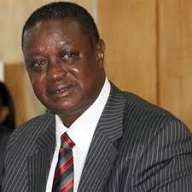
Interim ODM leader and brother of the late Raila Odinga,Dr Oburu Odinga
By IP Political Desk
NAIROBI, Kenya (IP)
Raila Amolo Odinga is gone. With him departs more than just a man — an era, a movement and a political doctrine that defined Kenya’s opposition for more than six decades.
The House of Jaramogi, once the epicenter of national resistance, now finds itself in an unfamiliar position: powerful in memory but perilously close to political irrelevance.
Odingaism — the ideology, mystique, and emotional pull that defined Raila’s politics — has long lived on the fringes of power, always near yet never within.
The Odinga family, despite unmatched influence and national mobilization, never captured the presidency.
Yet they ruled the soul of the opposition, commanding loyalty not through state machinery but through pain, perseverance, and protest.
Now, that house — revered but throne-less — must confront a sobering question: What next?
An Era Ends, Uncertainty Begins
Raila’s death marks the definitive close of a political era.
For decades, he was more than a politician — he was the embodiment of defiance, the voice of the disillusioned, and the gravitational center of Kenya’s opposition.
His towering presence kept the Azimio coalition intact, forged alliances across ethnic and ideological lines and balanced state power through sheer moral authority.
Without him, the Odinga-led movement risks splintering. Local leaders in Luo Nyanza, no longer bound by Raila’s commanding influence, may form rival camps seeking personal gain over collective vision.
Azimio itself appears rudderless — still mourning, yet already fracturing.
Oburu Steps In
In a move aimed at restoring stability, ODM appointed Dr. Oburu Odinga, Raila’s elder brother and Siaya senator, as interim chairman.
A seasoned politician and family patriarch, Oburu’s appointment represents both continuity and nostalgia — a bid to keep the Odinga name at the center of the party’s identity.
Supporters see the decision as a unifying gesture, while critics view it as a stopgap measure delaying generational change.
For some, Oburu symbolizes experience and institutional memory; for others, a reminder that the party remains trapped in dynastic succession rather than ideological renewal.
The Lure of State Power
President William Ruto, ever the political tactician, has moved swiftly to read the moment.
His administration appears poised to exploit ODM’s disarray through inclusion and appeasement rather than confrontation.
Already, ODM leaders in government have begun signaling cooperation.
Energy Cabinet Secretary Opiyo Wandayi declared, “Baba has left us in government led by President Ruto, and that is where we are going to stay till the end. We shall walk step by step with President Ruto beyond 2027.”
He also praised the party’s leadership decision:
“ODM has made a very wise choice to appoint Dr. Oburu Odinga as acting party leader, and I will be proposing that our delegates confirm him formally at the convention.”
Wandayi’s remarks underscored a new tone — one of partnership rather than protest — signaling ODM’s intent to remain within the “broad-based government” framework initiated before Raila’s passing.
Voices of Dissent
A Dynasty Without a Throne: After Raila, What Becomes of Odingaism? Yet not everyone in ODM is reading from the same script.
The declaration that the party will remain in government has triggered unrest among the younger generation of ODM leaders, who see it as a betrayal of the movement’s oppositional roots.
Secretary-General Edwin Sifuna has been firm on the matter:
“ODM remains an opposition party, and it will continue to execute its role.”
He warned that if the party ever decides to back Ruto politically, he would walk away.
“The day the party decides it wants to support Ruto come 2027 — that one I will not read.”
Embakasi East MP Babu Owino has voiced similar defiance.
“I am criticising the broad-based government because it’s the right thing to do,” he said. “As a leader, I can’t see wrong and support it in a public forum — not even in private.”
Still, Babu maintains loyalty to Raila’s legacy, saying, “Whether ODM gives me a ticket or not, you won’t hear me stand somewhere fighting Raila. Raila is like a father to me.”
Their statements highlight the growing ideological rift: between the older establishment that sees opportunity in collaboration and younger reformists who believe ODM’s soul lies in its resistance to state power.
Unity or Fragmentation?
At the heart of this reckoning lies the fate of Luo political unity — and, by extension, Kenya’s opposition.
For decades, the Odinga name was the glue binding the region’s political identity. Without Raila’s unifying presence, the party risks drifting into factionalism.
Dr. Oburu’s appointment has bought time, but time alone may not heal the divide.
If ODM continues to align itself with the government, it may alienate its base and push youthful leaders toward forming a new bloc built around reform and independence.
A split would not only redefine ODM but could permanently reshape Odingaism — from a populist movement of defiance into a diluted brand of insider pragmatism.
Final Thoughts
Raila Odinga was many things: a freedom fighter, a statesman, a symbol of resistance.
He never occupied Kenya’s highest office, yet he moved mountains from outside it.
In his passing, the Odinga dynasty stands at a crossroads — its influence intact, but its future uncertain.
The selection of Dr. Oburu Odinga gives ODM continuity, and CS Wandayi’s stance ensures presence in government.
That very choice may accelerate internal dissent and erode the moral clarity that once defined the movement.
Dynasties do not die with their patriarchs — but they must evolve.
The throne may never have been claimed, yet the legacy, if preserved and reimagined, can still shape Kenya’s political soul.
Whether Odingaism becomes a relic or a revolution now rests not in the hands of Raila’s heirs — but in the will of the people he so fiercely believed in.