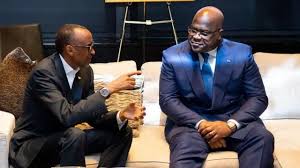
President Paul Kagame of Rwanda and Felix Tshisekedi of Congo…Photo/courtesy.
By Peter Mwibanda.
KINSHASA, DR Congo (IP) — The March 23 Movement (M23) rebel group and the government of the Democratic Republic of Congo have signed a long-awaited ceasefire agreement, stirring cautious optimism for peace in a region battered by decades of violence.
The deal, reached through regional mediation and international pressure, calls for an immediate halt to hostilities, withdrawal from occupied areas, and a commitment to political dialogue.
It follows months of deadly fighting that has displaced more than one million people and severely strained relations between Kinshasa and neighboring Rwanda — which has long been accused of supporting the rebels, an allegation Kigali denies.
A Fragile Pause.
The ceasefire is being welcomed by regional and international actors including the African Union, the East African Community, and the International Conference on the Great Lakes Region. But analysts and residents alike remain skeptical.
“The ceasefire is a step forward, but the situation on the ground remains volatile,” said Emmanuel Kabenga, a peace researcher based in Goma.
“The real test is whether the parties can commit to a political process that addresses root causes — ethnic divisions, resource control, and regional interference.”
The M23, which resurfaced in 2021 after years of dormancy, claims to defend the rights of Tutsi communities in eastern Congo.
However, its resurgence has been marred by attacks on civilians, occupation of towns, and disruption of aid operations — drawing condemnation from humanitarian groups.
Regional and Global Stakes.
The truce comes amid growing international concern over the deteriorating security in eastern Congo, especially as the country heads toward national elections.
The United Nations peacekeeping mission in the country, MONUSCO, praised the agreement but stressed that durable peace requires “justice, accountability and reconciliation.”
Rwanda’s suspected involvement remains a major obstacle. Despite mediation efforts by Angola and Kenya, Kinshasa has demanded strict verification measures and regional safeguards to prevent further foreign interference.
President Félix Tshisekedi has urged neighboring states to respect Congo’s territorial integrity and has called on rebel groups to embrace peaceful, democratic engagement.
A Path Forward?
Eastern Congo, rich in minerals such as cobalt, coltan and gold, has seen nearly 30 years of war, militia violence, and foreign incursions. Despite its wealth, the region remains lawless and impoverished.
“We are tired of empty promises,” said Marie Bahati, a displaced teacher from North Kivu. “We want to go back home. We want schools, hospitals, and farms — not bullets and bombs.”
Analysts say implementation of the ceasefire will be key. Will the M23 withdraw? Will the government follow through on reintegration and reforms? Will the international community provide oversight and support?
For now, there is cautious hope that this ceasefire could mark a turning point. But many in Congo know too well that peace declarations — without action — have failed before.
Peter Mwibanda is a legal analyst and political blogger focusing on African governance, peace building, and youth-driven transformation.
Ends.