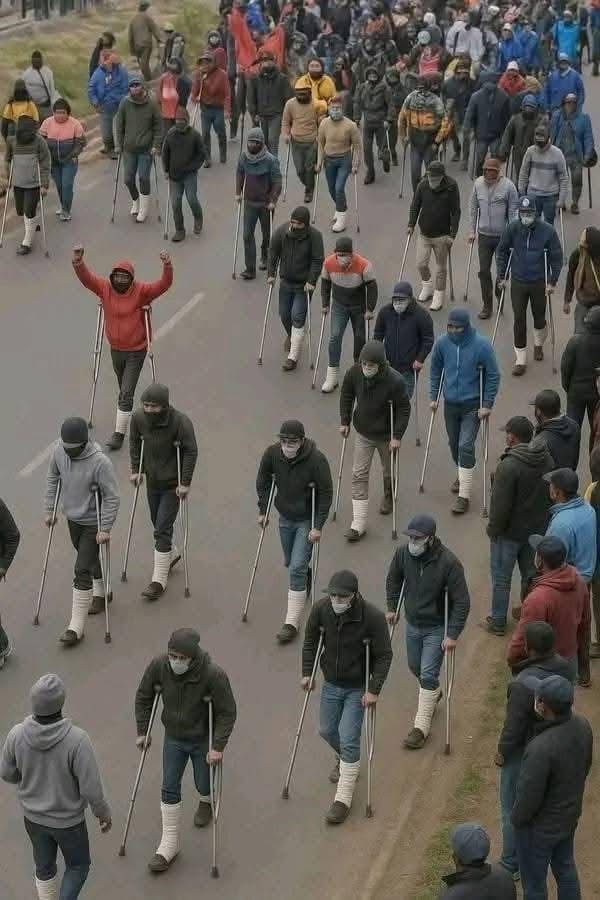
This is how Kenyans will live with if Ruto’s directive is implemented by the police.
By Peter Mwibanda.
NAIROBI, Kenya (IP).
President William Ruto’s recent comment that police should shoot protesters in the legs has sparked national and international outrage.
Legal experts, human rights advocates, and opposition leaders say the remarks violate Kenya’s Constitution and incite unlawful use of force.
Speaking during a public event last week, Ruto defended police actions during ongoing anti-government demonstrations. He said officers should aim at protesters’ legs rather than allow “chaos in the streets.”
The protests, largely led by young Kenyans, have targeted government corruption, harsh taxation, and economic mismanagement. The president’s remarks came amid rising tensions and multiple deaths linked to police crackdowns.
Critics Call it a “Shoot-to-Maim” Order
Human rights groups say Ruto’s comments amount to a dangerous and illegal directive.
“This sounds like a shoot-to-maim policy,” said Irungu Houghton, executive director of Amnesty International Kenya. “Such statements embolden rogue officers and weaken public trust in the rule of law.”
More than 40 protesters have been killed since demonstrations escalated in June. Victims include teenagers, university students, and unarmed civilians.
Lawyers Say Directive is Unconstitutional
Legal experts argue the president’s comments directly violate the Constitution.
“Every person has the right to life, dignity, and security,” said Esther Adhiambo, a constitutional lawyer. “There is no provision that permits shooting unarmed citizens — in the legs or anywhere else.”
Article 37 of Kenya’s Constitution protects the right to peaceful assembly and protest.
Observers say recent police actions, including the use of live ammunition, tear gas, and forced abductions, are in direct violation of this right.
Opposition Accuses Ruto of Dividing the Nation
Under Article 131, the president is required to serve as a symbol of national unity and uphold the law.
Opposition leaders say Ruto is doing the opposite.
“Instead of listening to the people, he is turning the state into a battlefield,” said Rigathi Gachagua “This is repression, not leadership.”
Youth-Led Movement Gains Momentum
The protests, known as the Gen Z Revolution or Occupy Parliament, began as opposition to a finance bill.
They have since grown into a national movement demanding accountability and justice.
The government’s harsh response has fueled more anger and drawn criticism from civil society and international observers.
Political Stability at Risk.
Political analysts warn that Ruto’s rhetoric and the rising death toll could destabilize Kenya.
“Such remarks raise serious concerns about the president’s commitment to constitutional governance,” said Prof. Macharia Munene. “We are watching democratic norms break down.”
Calls for police reform are growing louder. Activists demand independent investigations into killings, disappearances, and unlawful detentions.
A Climate of Fear
Many Kenyans now say they are afraid to speak out or protest.
“This is not the democracy we voted for,” said Carol Wambui, a university student in Nairobi. “We are not criminals. We are citizens demanding justice.”
A Threat to the Constitution
Kenya’s 2010 Constitution was designed to protect citizens from state abuse.
Human rights defenders warn that Ruto’s words undermine that promise and could return the country to an era of fear.
“This is about more than protesters,” Adhiambo said. “This is about whether the Constitution still protects us — or if we are on our own.”
Ends.