


By PETER MWIBANDA
NAIROBI, Kenya.
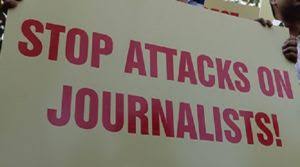
A troubling wave of violent attacks against journalists is fueling fears of a systematic effort to stifle independent reporting and erode press freedom in Kenya.
What once appeared to be isolated incidents of harassment and intimidation has evolved into a disturbing pattern, with journalists increasingly targeted in the line of duty.
Over the past year, reporters covering protests, corruption scandals and political controversies have faced beatings, arbitrary arrests and threats. In several cases, attackers confiscated cameras and phones or destroyed footage to prevent exposure of rights abuses.
Media watchdogs say the attacks are no longer random but appear to reflect a broader strategy to suppress dissent and silence critical voices.
“The scale and frequency of these assaults indicate a deliberate strategy to intimidate the press,” said Joseph Ochieng, a media rights advocate with the Kenyan Coalition for Freedom of Expression. “Journalists are being treated as enemies of the state rather than professionals carrying out a constitutional duty.”
In June, police officers were accused of beating reporters covering anti-government demonstrations in Nairobi’s central business district. Witnesses said uniformed officers dragged journalists behind police lines and struck them with batons. At least six reporters required hospital treatment for their injuries.
In another case, an investigative team from a national broadcaster was trailed by unmarked vehicles after reporting on alleged procurement fraud involving senior government officials. The journalists later received anonymous threats warning them to drop the story “or face consequences.”
The rising hostility has drawn condemnation from international human rights groups, which warn that Kenya risks sliding back into an era of repression reminiscent of the one-party rule in the 1980s.
“This is a dangerous climate for independent journalism,” said Maria Fernandez, East Africa program director at Reporters Without Borders. “We are seeing coordinated attempts to erode public trust in the media while subjecting reporters to violence and fear.”
Kenya’s constitution guarantees freedom of the press, and President William Ruto’s administration has repeatedly pledged to uphold media independence. But critics say those assurances ring hollow amid escalating threats and a lack of accountability for perpetrators.
Despite the growing risks, journalists across the country say they remain committed to their work. Many have adopted added safety measures, including working in teams, using encrypted communication, and publishing under pseudonyms to protect their identities.
“The public has a right to know the truth,” said Faith Mwikali, a freelance journalist who survived an attack while covering land rights protests. “If we give in to intimidation, impunity will thrive.”
Advocates are calling for swift investigations into all incidents of violence against journalists and for accountability at every level of government.
Without urgent action, observers warn, Kenya’s democratic gains — and the credibility of its institutions — could suffer lasting damage.
Ends.



