By IP Reporter.
NAIROBI, Kenya.
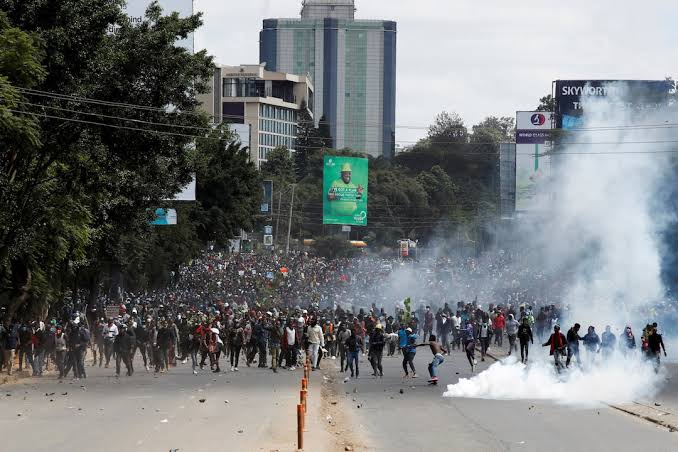
Kenya’s emergency response looked organized but overwhelmed Tuesday, as police cracked down on anti-government protests that left at least 16 people dead and over 400 injured.
Despite heavy deployment of riot units and barricades across key state institutions, rights groups say the state relied on force over care.
Critics called the response excessive and blamed the violence on poor crowd control, media blackouts, and lack of accountability.
The protests, driven by youth anger over rising taxes and governance failures, turned chaotic in several towns. Looting broke out in parts of Nairobi, Mombasa, and Nakuru.
Supermarkets and shops were vandalized. Police say the thefts, arson, and property damage triggered more aggressive tactics, including live fire.
Hospitals struggled. Kenyatta National Hospital received over 100 people with gunshot wounds.
Most of the dead were young, according to Amnesty Kenya and the Kenya National Commission on Human Rights.
Police sealed off Parliament and State House with razor wire. A temporary broadcast ban imposed by the Communications Authority was later overturned by the High Court, which ruled it unconstitutional and driven by “emotion, not law.”
Analysts say the state is equipped for crowd control but unprepared to protect life. Civil society leaders condemned the use of force and called for independent investigations into the killings.
As the death toll rises, Kenya’s reputation as a regional democracy is under pressure.
The government’s response, observers warn, risks deepening the mistrust between authorities and a restless generation demanding change.
Ends.