By Sunday reporter.
As a scholar and researcher of Pentecostalism, I have often found myself drawn to the intricate tapestry of practices that define the movement.
One such experience unfolded during a monthly church gathering in Nairobi known as Daughters of Zion.
This women’s-only prayer meeting is a phenomenon I had heard much about, but nothing could prepare me for the sheer energy, passion, and fervor I encountered there.
The Gathering of Daughters.
The event was held in a spacious Pentecostal church, its high ceilings amplifying the echoes of worship.
Women of all ages, dressed in colorful attire that ranged from modern to traditional, streamed into the sanctuary with an air of anticipation.
Their faces bore a mixture of determination and devotion, as if they were about to embark on a spiritual battle.
Interestingly, men were conspicuously absent, save for a handful from the tech team ensuring the sound and visuals ran smoothly, and the guest speaker, a pastor, who would later address the congregation.
The exclusivity of the gathering highlighted the unique space these women had carved out for themselves—a place where they could pray, weep, and war spiritually without inhibition.
The Cry of the Wailing Warriors.
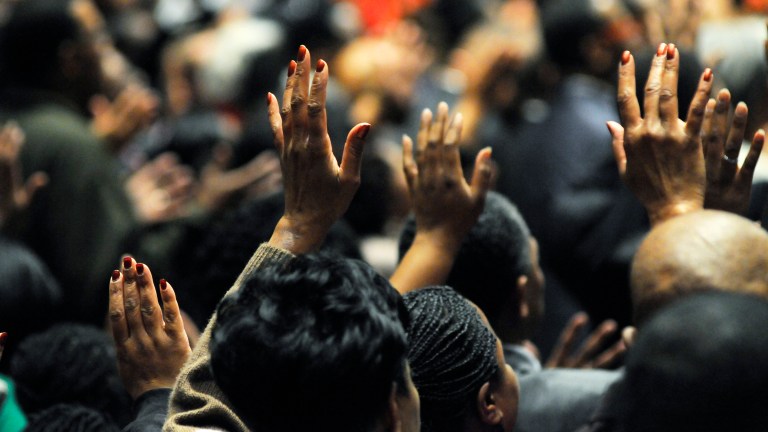
As the service began, a powerful wave of sound engulfed the room. Women lifted their hands, voices, and even bodies in collective prayer.
They prayed aloud with a passion that seemed to come from the depths of their souls, tears streaming down many faces. Some paced back and forth; others knelt, their heads bowed low.
The term Wailing Warriors could not have been more fitting.
Their prayers were not quiet or passive but loud and commanding.
They interceded for their families, communities, and nations, calling on God with a fierce urgency.
It was as if they were engaged in a spiritual battle, wielding their voices as weapons.
One elderly woman nearby caught my attention.
Her prayer was punctuated by cries and gestures that seemed to mimic a soldier on the battlefield.
She was not just praying; she was warring.
Many others joined her, their voices blending into a symphony of desperation and hope.
A Different Discourse.
When the guest speaker—a male pastor—finally took the stage, the dynamic shifted.
His tone was measured, even as he acknowledged the power of the women’s prayers.
He spoke about the biblical foundations of intercessory prayer, referencing passages that affirmed the women’s role as spiritual warriors.
While his discourse was enlightening, it felt somewhat removed from the raw energy of the prayers that had just filled the room.
The women, however, listened attentively, nodding in agreement, as if his words validated their efforts.
Reflection on the Experience.
As I observed this gathering, I could not help but reflect on the significance of such meetings in Pentecostalism.
In many ways, the Daughters of Zion represented a reclamation of agency and spiritual authority by women within the church.
Here, they were not merely participants but leaders, intercessors, and warriors.
The image of the Wailing Warriors stayed with me long after I left the church.
It symbolized the unique blend of vulnerability and strength that defines Pentecostal prayer.
These women were not just praying; they were fighting—for their families, their futures, and their faith.
For a scholar, this experience was a profound reminder of the power of religious practice to transform, empower, and unite.
For the women of Daughters of Zion, it was a monthly battle cry, a declaration of faith, and a testament to the unyielding spirit of the Wailing Warriors.
Ends.